
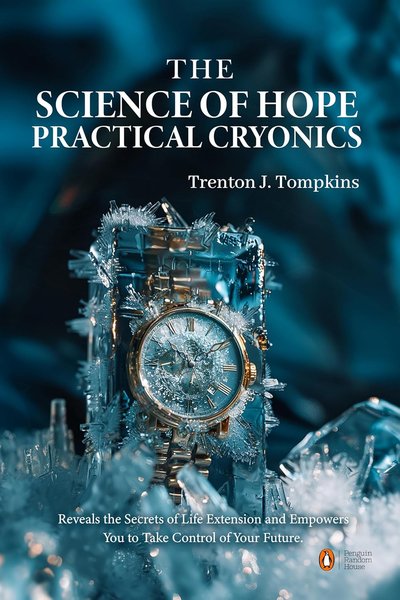
The Science of Hope,
Practical Cryonics.
Explore the science of life extension and empower yourself to take control of your future.
Grounded in Science
Clear explanations of cryonics and the real life-extension technologies behind it.
Empowering Knowledge
The information you need to make informed choices about your future.
Take Control
Practical steps you can take today to protect what matters tomorrow.
Hope for the Future
A vision of what is possible when science and choice come together.
The future is not something we wait for. It is something we prepare for.
Practical Cryonics reveals what modern science actually says about preserving the human mind — cutting through the myths, the fear, and the hype to weigh the evidence honestly.
With clarity and candor, Trenton J. Tompkins walks through the science, the ethics, and the logistics, so you can examine the question of long-term survival rationally and decide for yourself.
Get the BookAn essential guide for anyone serious about extending the boundaries of human potential.
Stay Informed
Get updates on new articles, events, and resources.
“I wrote the one book I thought this world needed.”
— Trenton Tompkins
A practical, serious introduction to cryonics—covering the science, ethics, logistics, and decision-making framework for readers who want to examine the subject rationally.
Written by Trent Tompkins for readers willing to take the question of death, technology, and long-term survival seriously.
Contact / Get Updates
Have a question about the book or want updates? Fill this out and I’ll follow up.
About

For most of human history, death has been treated as final. It was not a hypothesis but a presupposition - an unquestioned boundary condition of human existence. We are born, we age, we decline, and we die. That narrative has shaped our religions, our institutions, and our sense of what is possible.
But human history is, in large part, the story of boundaries dissolving.
In 1957, physicians discovered that a stopped heart could be restarted with electricity. By the standards of the previous year, those patients were dead. After defibrillation became routine, they were simply individuals in need of a specific intervention. The definition of death had not changed philosophically - but it had shifted technologically.
Cryonics proposes that another boundary may be similarly provisional.
Rather than treating death as a single irreversible event, cryonics treats it as a process - one that unfolds over time as biological structures degrade. If that process can be slowed, halted, or stabilized at the level of the brain's microstructure, then what we call "death" may in some cases represent a technical limitation rather than an absolute one.
Practical Cryonics examines this claim from three angles.
First, the science: what modern vitrification can and cannot preserve, and what it means to speak of the brain as an information-bearing structure.
Second, the ethics: whether extending the possibility of life is an act of hubris, desperation, or moral responsibility.
Third, the logistics: how individuals can think rationally about cost, risk, probability, and long-term outcomes without resorting to fantasy or denial.
Cryonics is often framed as a gamble. A more accurate description is that it is a bet - one made under uncertainty, like many consequential decisions in human life. The alternative is not certainty; it is the assumption that the current medical model is complete and final.
History suggests otherwise.
From anesthesia to antibiotics to organ transplantation, interventions once considered impossible have become ordinary. Each advance required a willingness to revise what counted as inevitable.
Practical Cryonics does not promise immortality. It does not claim that future revival is guaranteed. It asks a narrower question: if death is a process rather than an event, and if that process can be interrupted, what follows from that possibility?
At minimum, it requires us to reconsider what we mean by realism. There is a difference between acknowledging uncertainty and prematurely closing the door on future competence.
Life is finite under current constraints. Whether those constraints are permanent is an open question.
This book is for readers willing to examine that question seriously.
Sample Chapter: I. First Principles
For thousands of years, death was final. Then, in 1957, the first external defibrillation occurred. Electricity gave scientists the ability to restart the hearts of patients who, a decade before, would have been pronounced dead. Of course, this technology didn’t become available everywhere overnight. Many people that could have been saved by this new technology still died, as the medical establishment caught up to the new reality enabled by defibrillation.
We tend to think of reality as an objective truth. “Be realistic” is the admonishment given to school children and visionaries alike. But reality changes all the time, especially in terms of what is possible. Cars don’t drive themselves, or at least not, until they do.
Humans are great at telling themselves they understand reality. Disease? Simple, it’s caused by an imbalance of the four humors, phlegm, blood, black-bile and yellow-bile. Or the will of God. Or bad air, or witchcraft, or the devil. If there is one constant through history, it is how rarely people don’t have an explanation for something, even if that explanation is completely wrong.
Why does this matter in a book about cryonics?
Because cryonics is a bet. That doesn’t mean a gamble. But there are two parts to cryonics. The first part is the actual science of freezing a human body and preserving it in a way that provides for the best chance of future revival. That part can be done with the science we have today, and in that regard, cryonic preservation is a legitimate medical procedure, albeit an experimental one.
But cryonics is also a bet that future technology will make revival possible. People make bets like this all the time, when they buy stock in NVIDIA expecting next year’s graphics card will be better than this year’s or when they invest in a biotech startup hoping that their new cancer drug will pass clinical trials. Making these bets requires predicting the future accurately, and predicting the future accurately requires accurately understanding the present. Or luck. Or someone who can guide you through the decision-making process, which I hope to now do.
When I was a kid, I never thought a website like YouTube would be possible. Video files were big. Sharing video files took a lot of bandwidth, and that bandwidth was expensive. The first hard drive I ever bought cost $300 and held 10 gigabytes of data. I thought anyone who tried to let other people upload all the videos they wanted for free would go broke on storage and bandwidth costs. I was, thankfully, wrong. Google bought YouTube for $1.65 billion in 2006, probably not 5 years after I was sure the idea would be “impossible”.
What I find most interesting about this isn’t just that I was wrong, but how sure I was despite having actually very little information. I knew what hard drives retailed for, I knew what a few web hosts charged for bandwidth, but I had no idea what the people selling the bandwidth as part of their retail hosting packages paid for it. I had no idea what advertisers were willing to spend for targeted traffic. And while I knew that the price of storage went down every year, I’m not even sure I factored that into my calculations. I made a bad prediction for the future, because my model of reality was bad.
Author and psychiatrist Jordan Peterson calls these sometimes false and incomplete beliefs that shape our view of reality “fundamental presuppositions”. He emphasizes that these underlying beliefs or assumptions shape our worldview and behavior, often without conscious awareness. When people speak critically of why cryonics won’t work, one popular reason that people will give is “ice crystal formation damaging cells”. Yet modern cryonic procedures produce virtually no ice crystals. It is true that this was an early problem with the idea, but tens if not hundreds of thousands of hours have gone into researching the methods used in cryonics today, which produce virtually no ice crystals.
But most people have been taught since birth that death is unavoidable and that “Life is short”. Changing that fundamental assumption means adopting an entirely new model of reality. And there is a problem that occurs if one accepts the fact that death is avoidable. If death can be avoided, then it seems logical one should try to avoid it. That means signing up for cryonics, and paying for it, and maybe even realizing that the loved ones that you have buried could have lived — that they were the people who could have been defibrillated but were instead pronounced dead on the table.
That is a painful realization to accept, especially when one considers how many deaths could have been avoided with cryonics. But again, this is not a unique situation. Perhaps hundreds of thousands of people in the past died simply because doctors and surgeons didn’t wash their hands. It was not uncommon for a doctor in the 1800s to go from autopsying a diseased corpse to delivering a baby, often killing the mother in the process. But even when a Hungarian physician, Ignaz Semmelweis, discovered the problem and implemented a solution that was shown to work, doing things differently meant accepting that they had done them wrong in the past. One doctor, upon realizing he had unknowingly caused the deaths of so many patients, including his niece, felt so much guilt that he committed suicide. But it wasn’t just denial. The hygienic procedures were more time-consuming and expensive for the hospital than doing nothing. It was easier for those in charge to pretend as if the data showing the effectiveness of the new procedures was flawed or simply did not exist.
Belief perseverance describes how we continue to hold onto established beliefs even when faced with clear, contradictory evidence. We tend to prioritize our initial conclusions and resist changing our minds. It is easier to just concoct a reason that cryonics can’t work. And so, people readily believe that ice crystals form in cryonics patients and cause damage that can never be reversed.
Except, this doesn’t happen. Modern cryonics patients are not frozen so much as they undergo a process of vitrification, where the fluids in their body achieve a glass-like state without the formation of ice crystals. This can be confirmed by looking at other vitrified specimens of brain tissue under a microscope. Any ice crystals, especially those large enough to damage cells, would be easily visible, and they simply do not occur with modern cryonics methods.
But the people looking for a reason for cryonics not to work aren’t particularly concerned about advancements in science. The idea that humans, no matter how advanced, would be forever thwarted by the one-time formation of ice crystals that may puncture the linings of some cells seems to both overstate a minor problem and understate the much larger one of actually bringing a frozen human being back to life, but it also assumes that cells will need to be fixed. This assumption is based on a model of reality, which I believe may be deeply flawed.
In his book, which was published in 1964, The Prospect of Immortality, Robert Ettinger, the “father of cryonics”, makes some predictions about the future state of cryonics and how revival may be possible. Many of these predictions have aged badly. For example, he references a prediction made by Lee B. Lusted, a chemical engineer, that artificial organs with “electronic-control systems” would be able to replace nearly all of our organs by 2014. Other predictions have fared better, for example, organ transplants and transplants from animals, known as “xenotransplantation”.
While Ettinger’s predictions offered a glimpse into the possible future of cryonics, it’s clear that technological advancements often take unexpected paths. Some of his predictions, like the development of artificial organs with “built-in electronic control systems”, may have been overly optimistic, yet others, like organ transplants and xenotransplantation, have made significant strides. This divergence between prediction and reality highlights the unpredictable nature of technological progress.
Building on this idea, I believe that the path to reviving cryonically preserved individuals may not require the methods Ettinger envisioned. Instead, the future of cryonics might lie in leveraging cloning technology — a field that has already shown remarkable promise. Rather than focusing on repairing the damage at the cellular level within the original body, we may find that creating a new, genetically identical body provides a more efficient and feasible solution.
I believe that cryonics will be able to bring people back without ever needing to restore functionality to their cells. That is not to say that the latter task would be impossible, simply that I think it would be needlessly complex and unnecessary. I also believe that the technology to repair an entire body, cell by cell, molecule by molecule, will only be perfected long after the technology to bring someone back in a new body has been discovered, and by that point, everyone who could be revived will likely already have been.
To understand how this might be possible, let’s start with what science already knows how to do.
Science already knows how to completely replace your entire body, every cell of it, with a new, cloned version. This isn’t even cutting-edge science. Dolly, the first cloned animal, was created in 1996. The reasons that a human being has not yet been cloned (if indeed one has not) are legal and ethical, not technical in nature. If ethics and laws were removed from the equation, a person with the resources could, with current technology, create a clone of themselves to provide a complete source of younger, fully compatible transplant organs, and swap out their failing or cancerous organs with relative ease.
The ease in which a new, genetically identical body can be created offers the possibility of effectively “solving” medicine. In the future, minor ailments may still be treated with currently used drugs, but major health problems, including aging, will likely be addressed by simply replacing a patient’s entire body. It is this step, and not the reanimation of a frozen corpse, that I see as being the fundamental problem of revival.
II. Understanding Free Will
In classical mechanics, the physics of Isaac Newton, and even in special relativity, there is a concept known as determinism. Determinism is the belief that the current state of a “system”, whether it is an apple falling from a tree or a planet rotating around a star, is caused by its previous state, and if one knew all of the properties of all the items in that system, they could predict with complete accuracy the progression of that state. This model works for large, inanimate systems…
Read the Full Book
The complete text of Practical Cryonics, free to read online. Click any chapter to expand it.
"This is how humans are: We question all our beliefs, except for the ones that we really believe in, and those we never think to question."
-- Orson Scott Card, Speaker for the Dead
For thousands of years, death was final. Then, in 1957, the first external defibrillation occurred. Electricity gave scientists the ability to restart the hearts of patients who, a decade before, would have been pronounced dead. Of course, this technology didn't become available everywhere overnight. Many people that could have been saved by this new technology still died, as the medical establishment caught up to the new reality enabled by defibrillation.
We tend to think of reality as an objective truth. "Be realistic" is the admonishment given to school children and visionaries alike. But reality changes all the time, especially in terms of what is possible. Cars don't drive themselves, or at least not, until they do.
Humans are great at telling themselves they understand reality. Disease? Simple, it's caused by an imbalance of the four humors, phlegm, blood, black-bile and yellow-bile. Or the will of God. Or bad air, or witchcraft, or the devil. If there is one constant through history, it is how rarely people don't have an explanation for something, even if that explanation is completely wrong.
Why does this matter in a book about cryonics?
Because cryonics is a bet. That doesn't mean a gamble. But there are two parts to cryonics. The first part is the actual science of freezing a human body and preserving it in a way that provides for the best chance of future revival. That part can be done with the science we have today, and in that regard, cryonic preservation is a legitimate medical procedure, albeit an experimental one.
But cryonics is also a bet that future technology will make revival possible. People make bets like this all the time, when they buy stock in NVIDIA expecting next year's graphics card will be better than this year's or when they invest in a biotech startup hoping that their new cancer drug will pass clinical trials. Making these bets requires predicting the future accurately, and predicting the future accurately requires accurately understanding the present. Or luck. Or someone who can guide you through the decision-making process, which I hope to now do.
When I was a kid, I never thought a website like YouTube would be possible. Video files were big. Sharing video files took a lot of bandwidth, and that bandwidth was expensive. The first hard drive I ever bought cost $300 and held 10 gigabytes of data. I thought anyone who tried to let other people upload all the videos they wanted for free would go broke on storage and bandwidth costs. I was, thankfully, wrong. Google bought YouTube for $1.65 billion in 2006, probably not 5 years after I was sure the idea would be "impossible".
What I find most interesting about this isn't just that I was wrong, but how sure I was despite having actually very little information. I knew what hard drives retailed for, I knew what a few web hosts charged for bandwidth, but I had no idea what the people selling the bandwidth as part of their retail hosting packages paid for it. I had no idea what advertisers were willing to spend for targeted traffic. And while I knew that the price of storage went down every year, I'm not even sure I factored that into my calculations. I made a bad prediction for the future, because my model of reality was bad.
Author and psychiatrist Jordan Peterson calls these sometimes false and incomplete beliefs that shape our view of reality "fundamental presuppositions". He emphasizes that these underlying beliefs or assumptions shape our worldview and behavior, often without conscious awareness. When people speak critically of why cryonics won't work, one popular reason that people will give is "ice crystal formation damaging cells". Yet modern cryonic procedures produce virtually no ice crystals. It is true that this was an early problem with the idea, but tens if not hundreds of thousands of hours have gone into researching the methods used in cryonics today, which produce virtually no ice crystals. But most people have been taught since birth that death is unavoidable and that "Life is short". Changing that fundamental assumption means adopting an entirely new model of reality. And there is a problem that occurs if one accepts the fact that death is avoidable. If death can be avoided, then it seems logical one should try to avoid it. That means signing up for cryonics, and paying for it, and maybe even realizing that the loved ones that you have buried could have lived - that they were the people who could have been defibrillated but were instead pronounced dead on the table.
That is a painful realization to accept, especially when one considers how many deaths could have been avoided with cryonics. But again, this is not a unique situation. Perhaps hundreds of thousands of people in the past died simply because doctors and surgeons didn't wash their hands. It was not uncommon for a doctor in the 1800s to go from autopsying a diseased corpse to delivering a baby, often killing the mother in the process. But even when a Hungarian physician, Ignaz Semmelweis, discovered the problem and implemented a solution that was shown to work, doing things differently meant accepting that they had done them wrong in the past. One doctor, upon realizing he had unknowingly caused the deaths of so many patients, including his niece, felt so much guilt that he committed suicide. But it wasn't just denial. The hygienic procedures were more time consuming and expensive for the hospital than doing nothing. It was easier for those in charge to pretend as if the data showing the effectiveness of the new procedures was flawed or simply did not exist.
Belief perseverance describes how we continue to hold onto established beliefs even when faced with clear, contradictory evidence . We tend to prioritize our initial conclusions and resist changing our minds. It is easier to just concoct a reason that cryonics can't work. And so, people readily believe that ice crystals form in cryonics patients and cause damage that can never be reversed.
Except, this doesn't happen. Modern cryonics patients are not frozen so much as they undergo a process of vitrification, where the fluids in their body achieve a glass-like state without the formation of ice crystals. This can be confirmed by looking at other vitrified specimens of brain tissue under a microscope. Any ice crystals, especially those large enough to damage cells, would be easily visible, and they simply do not occur with modern cryonics methods. But the people looking for a reason for cryonics not to work aren't particularly concerned about advancements in the science of cryonics. The idea that humans, no matter how advanced, would be forever thwarted by the one-time formation of ice crystals that may puncture the linings of some cells seems to both overstate a minor problem and understate the much larger one of actually bringing a frozen human being back to life, but it also assumes that cells will need to be fixed. This assumption is based on a model of reality which I believe may be deeply flawed.
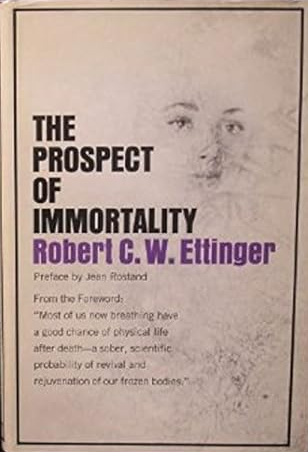
In his book, which was published in 1964, "The Prospect of Immortality", Robert Ettinger, the "father of cryonics", makes some predictions about the future state of cryonics and how revival may be possible. Many of these predictions have aged badly. For example, he references a prediction made by Lee B. Lusted, a chemical engineer, that artificial organs with "electronic-control systems" would be able to replace nearly all of our organs by 2014. Other predictions have faired better, for example, organ transplants and transplants from animals, known as "xenotransplantation". In fact, the reason that the former technology never materialized may have simply been the work on the latter.
While Ettinger's predictions offered a glimpse into the possible future of cryonics, it's clear that technological advancements often take unexpected paths. Some of his predictions, like the development of artificial organs with "built-in electronic control systems" , may have been overly optimistic, yet others, like organ transplants and xenotransplantation, have made significant strides. This divergence between prediction and reality highlights the unpredictable nature of technological progress.
Building on this idea, I believe that the path to reviving cryonically preserved individuals may not require the methods Ettinger envisioned. Instead, the future of cryonics might lie in leveraging cloning technology--a field that has already shown remarkable promise. Rather than focusing on repairing the damage at the cellular level within the original body, we may find that creating a new, genetically identical body provides a more efficient and feasible solution.
I believe that cryonics will be able to bring people back without ever needing to restore functionality to their cells. That is not to say that the latter task would be impossible, simply that I think it would be needlessly complex and unnecessary. I also believe that the technology to repair an entire body, cell by cell, molecule by molecule, will only be perfected long after the technology to bring someone back in a new body has been discovered, and by that point everyone who could be revived will likely already have been.
To understand how this might be possible, let's start with what science already knows how to do.
Science already knows how to completely replace your entire body, every cell of it, with a new, cloned version. This isn't even cutting-edge science. Dolly, the first cloned animal, was created in 1996. The reasons that a human being has not yet been cloned (if indeed one has not) are legal and ethical, not technical, in nature. If ethics and laws were removed from the equation, a person with the resources could, with current technology, create a clone of themselves to provide a complete source of younger, fully compatible transplant organs, and swap out their failing or cancerous organs with relative ease.
The ease in which a new, genetically identical body can be created offers the possibility of effectively "solving" medicine. In the future, minor ailments may still be treated with currently used drugs, but major health problems, including aging, will likely be addressed by simply replacing a patient's entire body. It is this step, and not the reanimation of a frozen corpse, that I see as being the fundamental problem of revival.
In classical mechanics, the physics of Isaac Newton, and even in special relativity, there is a concept known as determinism. Determinism is the belief that the current state of a "system", whether it is an apple falling from a tree or a planet rotating around a star, is caused by its previous state, and if one knew all of the properties of all the items in that system, they could predict with complete accuracy the progression of that state. This model works for large, inanimate systems.
Unfortunately, physicists have tried to argue that this is true of all systems, including those involving sentient lifeforms. But sentient lifeforms have free will, and are conscious, and neither of these two clearly observable truths are explained by modern physics.
The obvious thing for physicists to do would simply be to accept that determinism only applies to systems that do not contain conscious life. That, the rules that govern a falling apple are not the same rules that govern conscious choice - in the same way two magnets sticking together is caused by a fundamentally different force than the one that sticks an apple to the planet earth. Instead, they have taken the much more human approach of insisting that all that they know is all there is to know. That what we perceive as free will is an illusion, and that are actions are just caused by the states of the neurons in our brain and electricity flowing through it.
We know at the quantum level, determinism breaks down. The Heisenberg uncertainty principle, articulated by the German physicist Werner Heisenberg in 1927, states that the position and the velocity of an object even as simple as a photon or electron cannot both be measured exactly, at the same time, even in theory. At the quantum level, the world is one of probabilities, with exact positions only being knowable at the time of measurement.
Despite this, some physicists argue for a form of super-determinism, positing that what appears as randomness might actually be governed by deeper, unseen laws. This perspective implies that the randomness we perceive is merely a result of our incomplete understanding of either these laws or the state of the system. For cryonics, this debate is crucial. Quantum indeterminacy may be the mechanism by which free will and consciousness manifest themselves, and the potential role of quantum effects in the brain may affect how we approach the challenge of maintaining personal identity through the cryopreservation process.
Einstein used a thought experiment to fundamentally change how scientists thought of time. By imagining what observers would observe from different perspectives, he was able to deduce the theory of general relativity, and prove that time was not constant, but experienced differently by different observers.
The same approach has been used to try to understand the nature of human consciousness. Many thought experiments have been proposed, providing hypothetical "what if" scenarios, such as "What if you replaced every neuron in a person, one at a time, with an identical neuron. Would they be the same person? Then, what if you took the neurons you replaced and constructed a new brain, exactly the same as the first, out of the original pieces? Would that also be the same person?" But where Einstein was able to use his thought experiments to eventually lead to a coherent, provable and useful framework, such scientific understanding of consciousness has yet to be achieved.
Why are Certain Lifeforms Sentient?
Imagine a planet with only single-celled life. These single cells would be "alive" in the biological sense, but they would not be sentient - in the same way that skin cells are alive but not sentient. Over time, mutations would occur among these cells, and the cells that most efficiently reproduced would become dominant in the population, and the next generation would therefore come mainly from these best-reproducers, the biologically "fittest" cells. This single-celled life would diversify to exploit different environments and niches, and certain single-celled organisms would become double-celled then multicellular organisms.
This process could all occur without any of the lifeforms attaining consciousness and being sentient. So why would any organism ever become sentient?
The theory of natural selection provides the most general answer to this question. Organisms become sentient because natural selection must select for it in some circumstances. Fundamentally, the reason why humans are sentient is the same as why elephants have trunks, because being sentient must provide an evolutionary advantage.
So, what is the evolutionary advantage?
The theory of evolution explains that, if an animal has a trait such as a long neck, natural selection must have chosen for it. In the case of a long neck, researchers can observe the animal, and come up with a theory as to the neck's "purpose", such as, allowing the animal to eat leaves located high up. Not every trait's purpose is immediately clear, like why a peacock would have massive tail feathers despite being prey to numerous other animals. But that doesn't mean there isn't a purpose, just that it has yet to be discovered.
How Does Being Sentient Benefit an Organism?
While natural selection provides the general reason that living organisms are sentient (i.e- it conveys a survival advantage), it does not provide the mechanism behind that advantage. Why would a non-poisonous moth be brightly colored? Does the coloration help it attract a mate, or does it resemble another moth that is poisonous and thereby fool predators? Either or both possibilities could be true, and only a mix of theorizing and observation can reveal the truth.
Single celled organisms can move toward food and away from harm; they can even engulf prey. A nematode worm, Caenorhabditis elegans, is controlled by 302 neurons, all of which have been mapped. The little worm operates like a little automaton, made from biological parts. Even in organisms that are sentient, numerous forms of "decision making" occur unconsciously, so why are all decisions not made unconsciously? Why do humans have a consciousness that experiences and perceives the world, when a nematode can just connect together its 302 neurons?
The first step to answering this question might be to look at humans and see what tasks they consciously do. Humans control their hands and feet, but not their livers or kidneys. People can't choose to grow their hair, or how much insulin their body produces, or even feel it if someone cuts into the brain itself. While we may think of ourselves as a biological being that perceives reality, the reality we experience is actually generated by the software of the brain, and it only approximates reality so that we can make choices that benefit the replication, and therefore, generally, the survival, of the organism in which our consciousness resides.
Put simply, humans are sentient because it allows them to perform the tasks they perform consciously better than they could be performed unconsciously.
If that is why humans (and other sentient lifeforms) are sentient, how are they sentient?
Robert M. Sapolsky wrote a truly massive, interdisciplinary book on human behavior, fittingly called "Behave" . In it, he attacks the idea of what he calls the homunculus, the idea that "in a concrete bunker tucked away in the brain, sits a little man (or woman, or a gendered individual), a homunculus at a control panel" (pg 588). Dr. Sapolsky's homunculus is essentially what would generally be referred to as a soul, the "us" inside our brains.
His main rationale for there not being a "homunculus" seems to be that, since he can explain the brain at every level of function, there isn't a homunculus because there doesn't need to be a homunculus. But this explanation leaves unexplained the very observable fact that we are ourselves, indeed, sentient. If everything is as determined as a nematode's brain, then life wouldn't need to be perceived at all. It would all run as unconsciously as a stomach digesting food or kidneys regulating insulin.
The crux of Dr. Sapolsky's mistake seems to be found in the footer of page 583, where he states: "And one thing I'm not going anywhere near is this New Age-y notion: "Of course we have free will. You can't say that our behaviors are determined by a mechanistic universe, because the universe is indeterministic, because of quantum mechanics." Argh. What anyone sensible who has thought about this will point out is that (a) the consequences of the subatomic indeterminacy of quantum mechanics (about which I understand zero) don't ripple upward enough to influence behavior, and (b) if they did, the result wouldn't be the freedom to will your behavior. It would be the utter randomization of behavior"."
His "point (a)" is backed up by no facts. But "the consequences of the subatomic indeterminacy of quantum mechanics" do ripple upward enough to influence behavior; at least, in computers they do . As chip designs shrink to 5nm and beyond, quantum effects are emerging as a widespread and significant problem. And this occurs even in computers not meant to utilize and even actively mitigate the impact of these effects. The dendrites at the end of a neuron in the human brain measure around 500nm, but the synaptic cleft, the gap across which a neuron's signals cross, average about 20nm, just outside the range one would expect quantum effects to have an impact.
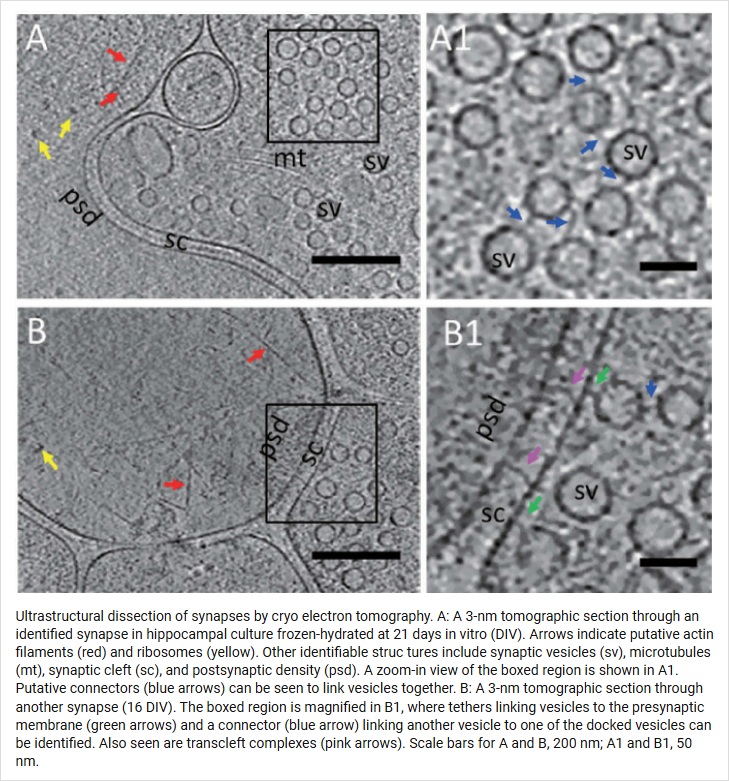
Quantum computers, designed specifically to harness quantum effects, have already been built, and it may be the human brain is, at least partly, this same type of computer. And there is also growing evidence suggesting that at least some lifeforms, such as European robins, might also use quantum mechanics, at least for tasks like navigation.
The human brain is basically like a sack of batteries. Neurons use a sodium-potassium pump to pump potassium into the cell and sodium outside the cell. This allows the neuron to store a charge, and communicate with other neurons by passing that charge down its axon. If our consciousness is the product of the electro-chemical activity in the brain, which is what most scientists believe, then it may be that it is only the electrical activity that is responsible for consciousness, and the chemical activity is merely used to regulate what electrical activity is produced. Quantum effects may take place not within the molecules of the brain itself, but within the electrical activity, with free will perhaps affecting which path among all possible paths electrons will flow.
The bigger problem with Dr. Sapolsky's argument is that it assumes that the effects of all quantum indeterminacy are random. By so doing, he also assumes that the brain doesn't use quantum effects to function. But it may. Think of how a sound can startle a person, not because a great amount of vibration occurs but because the brain is designed to amplify its effect. In fact, quantum effects may be how "free will" is manifest in living beings. It may be the only way free will could exist, as most of the brain's neurons are connected in neural networks with fixed outputs for given inputs. That is not to say that free will could somehow affect something else, like the flow of electricity, and that our understanding of how electric current moves, while correct generally, is incomplete and that the brains of certain creatures create a special case that causes electricity to behave differently in a way that science does not currently understand.
Whatever the underlying mechanism, free will does exist- and is plainly observable. The only reason anyone would need to deny it and argue it was "merely an illusion" is if they wrongly assumed that because the majority of the brain has fixed inputs and outputs, all of the brain works in this manner.
At one time, this was how brains worked. In a nematode, it is likely still how brains work. However, the current understanding of the quantum world is far too limited to rule out the idea that quantum effects could meaningfully affect the brain.
Why all this matters.
There are billions of humans alive on this planet. Of all these billions of humans, you experience the world from the perspective of only one. That basic question, of why you are who you are and not someone else, is one that science can't answer.
It also can't answer the question of what you experience after death. I think it is reasonable to assume some form of reincarnation occurs, if not immediately, then at some future point, which may feel immediate. After all, we were all incarnated once, and I see no compelling reason why that phenomenon wouldn't be cyclical, as almost all phenomena are. As to how long it takes for us to reincarnate, I do not know, but it may well be the case that we can only perceive time when we are alive. As unintuitive as this may seem, science has already proven that time moves at different rates for different observers. If this is the case, the first thing you might experience after dying is just being alive again. You'd be somewhere else, some when else, and perhaps something else, but you may not know any of that. You'd just be as you were before you were born, destined, or condemned, to live life anew.
The question of our "soul", why we perceive the world through the body we are in and not someone else's, is not some unanswerable philosophical question. Science is already at the point where it can create a complete clone of a human body. But no one would seriously argue a genetic clone is the same person, any more than two identical twins are the same person. But what if we could simply move someone's soul to a new body? What if Dr. Sapolsky's homunculus not only exists, but is what we really mean when we speak of ourselves, and it could be moved from its control panel in one brain and setup behind the controls of another? I believe that feat is well within the realm of what is scientifically possible, and even within the realm of what will someday be achieved.
The first question to answer is how do humans get a soul in the first place? Every human starts as a single cell, which isn't much different than any other cell. There is no brain, no nervous system. Being sentient, conscious, whatever word that one prefers to use, appears to be an emergent property - in the same way you can't have a river with one molecule of water, you can't be sentient with only one cell. I think what happens is, as the brain comes online, it somehow selects a "soul" from some giant, finite pool of all possible souls. Think of it like a car radio scanning for a station. Once it locks on, once it receives some kind of "input" from that soul, then it forms in such a way that it will only ever receive input from that soul.
I said earlier that the reason living beings become sentient must do with natural selection. It may be that our consciousness is a type of quantum computer, able to better control a living organism than some fixed-mass of neurons could. And what tasks are our souls better able to handle? My guess would be the ones delegated to us. Moving, seeing, speaking, decision making - those are functions that a "soul" helps a biological body with. After all, I can't control how much growth hormone my body makes. If I'm at a party enjoying being drunk, I can't tell my liver to slow down the process of making alcohol dehydrogenase to avoid becoming sober. I can however, partly control whether or not I produce adrenaline. Adrenaline is actually an interesting example, because its production is neither entirely conscious nor unconscious. A much simpler example is breathing - I can hold my breath, but not until I die. Some animals can't control when they defecate. Rats feel fear when they smell a cat, even if they've never seen a cat. What tasks we are conscious of seems then entirely determined by natural selection. If our conscious choices help survivability, they are selected for, and where they hurt survivability, they are selected against.
And it may be, that the reason we experience life the way we experience it- is because it allows us to be the most useful to the biological creature we inhabit. It would be hard to focus on finding food and mating if we were also burdened with digesting food and remembering to beat our hearts. So, the body automates what it can, hides our awareness of what it feels isn't presently relevant, makes us comfortable when we are doing good and uncomfortable when we are doing bad, and leaves our conscious mind to the things it does best.
When asked if he believes in God, Jordan Peterson answered the question by saying, "I act as if I do". If free will is truly illusionary, as some scientists have theorized, they certainly behave as if they have free will. The idea that everyone just does what they are predestined to do, even if supported by our current, limited knowledge of physics and biology, is certainly treated as false in practice. No one could prevail by arguing in a court of law that they should not be punished because the universe is super-deterministic. The problem is, science seeks objective truths, things like the speed of light or number of molecules in a gram of silver.
To understand the problem, imagine an experiment: I tell you to pick right or left. You can choose to pick either. You know that you are free to consciously choose either one. Maybe you have some weird, preset belief that right is always better than left. Maybe there is even some random number generator in your brain whose workings you are not privy to. But for most decisions, we can say we know to have free will, because that is how we experience the world.
Science considers objective truths to be the "highest truths". But I would argue the highest truths are the ones we actually experience. Peterson uses the example of pain, no one behaves as if their pain isn't real. Our eyes can fool us, we can see things that are not there. Our minds can fool us, we can believe things to be true that are not. But certain things, like pain, just are. Pain is real, fear is real, love is real.
But now imagine the same experiment as before. You tell me to pick right or left. I pick left. Was that me exercising my free will, or did the neurons in my brain just compute a response that made sense based on your request? See, when I said pain, fear and love are real, I meant the pain, fear and love I feel. You can know that the pain, fear and love you feel are real, but I can only assume so.
And understanding this is critical to cryonics working. It isn't enough that someone's frozen corpse can be brought back to life with its memories intact. It needs to still BE that person. And conversely, if we could make a new body but still have it be the person who froze themselves, the process of repairing their old body may be completely unnecessary, and a roadblock to the process of bringing them back.
Thankfully, as technology advances, this philosophical problem will become a scientific one, and one we will eventually be able to solve. But first, we need to understand how the brain works.
In the movie The Matrix, Neo discovers that what he thinks of as reality is actually a computer simulation. People such as Elon Musk have said publicly that we may all be living in a simulation, and in fact there are some very scientific arguments that can be made in support of this claim, such as time being relative to the observer, and subatomic particles only choosing one of many possible locations once observed.
But whether or not all of humanity is in a simulated world macroscopically, we are all in a simulated world individually. As anyone who has ever woken up in the middle of a dream knows, the reality we perceive is actually a product of our individual brains.
Reality, as we experience it, is just an approximation of actual reality, given to us by the "software" in our brains. Sometimes, as in the case of vision, what we perceive may be close to what is actually going on. Other senses are more abstract - hearing is achieved by the vibration of our ear drums, but the way we "hear" sounds and speech is nothing like "feeling our eardrums vibrate". Bats and dolphins may be able to "see" with sound as well as hear it. And even with sight, possibly our "truest" sense, we still see only a partial range of a wide possible spectrum - and the "colors" we perceive different waves of light to appear as may entirely be a product of our brain, not inherent to reality itself. Nothing in reality seems to provide a reason that 420 manometer light should appear green while 700 nanometer light appear red. But biology does - berries and apples are red, and those are food, and it's easier to find food if it contrasts well with its background.
Once we understand that everything we experience is the result of "software" running inside our brains, then we can start to decode how that software works.
Inside our brains, billions of neurons are hooked up in complex networks. Computer scientists are finally beginning to learn how to setup networks of simulated neurons to let computers perform tasks like image recognition that we once thought impossible. The great thing about these neural networks is that generally, the output of them is "fixed", dependent on the inputs. This means that scientists will eventually be able to figure out what neurons belong to what networks, and what tasks they are responsible for.
Before scientists discover why we are sentient, how free will manifests, or where the "soul" is inside our brains, they will be able to start finding where it is not. Going through the 86 billion neurons of even one person will be a monumental task. But so was sequencing the 3 billion base pairs of the first human genome, a task which can now be done in just a few hours!
A "connectome" is a detailed map of all the neural connections within a brain, essentially its wiring diagram. Creating a connectome involves several steps: first, brain tissue is prepared and imaged using powerful microscopes. Then, computers analyze these images to identify neurons and trace their connections. This data is reconstructed to create a 3D map, which can be used to build computational models of the brain. While significant progress has been made, creating complete connectomes for larger organisms remains a challenge. However, advancements in technology and computational methods are driving research in this field, with the goal of unlocking the mysteries of the human brain.
It may be that just a very small portion of the entire brain is necessary to revive someone who is cryonically frozen, and that very large sections of the brain are almost identical between individuals and could be completely replaced with new, "stock" versions. In this way, cryonics could work a lot more like getting data and passwords off a crashed or virus ridden computer hard drive than trying to restore functionality to a damaged biological organ.
My purpose in this chapter is to bring my ideas full circle and theorize on how the future revival of cryonics patients will work. Before I go into this though, I want to stress the fact that, when deciding whether or not to do cryonics, perhaps little emphasis should be placed on the "how" revival will actually work.
The beauty of the theory of cryonics is that one can be completely wrong about "how" it will work, and still be completely correct in the decision to freeze themselves. As long as the brain is preserved in a way that revival is somehow possible, eventually I believe science will figure out a way to bring its owner back, and it may be completely different from how I think it is most likely. Maybe humans will not even be the ones who figure out how to revive frozen patients. Maybe they will code general AI that is so good that it will not only figure out how to revive cryonics patients, but several different workable methods.
It should be noted that the way I think cryonic revival will be possible differs from the way the Alcor Life Extension Society, a prominent cryonics society, describes on their website. They state that:
"In the future medicine will learn to master growth and development programs within the human body. Cells will be reprogrammed to heal severed spinal cords, regrow lost limbs, and even regenerate new organs. This kind of tissue regeneration already occurs naturally in children that lose fingertips, and in organs such as the liver. Extending these regenerative capabilities will be a matter of uncovering old programs that may still be dormant in our genes, and eventually writing new programs. In cases of severe injury, it is possible to imagine placing patients in a fluid support environment in which blood is artificially circulated to maintain life until vital organs are regenerated and all injuries healed. Such a healing process could theoretically start with just a brain. Programming a brain to regrow a new body may seem incredible, but nature already does things that are even more incredible. The body you have right now is the product of a growth program that started from a single cell."
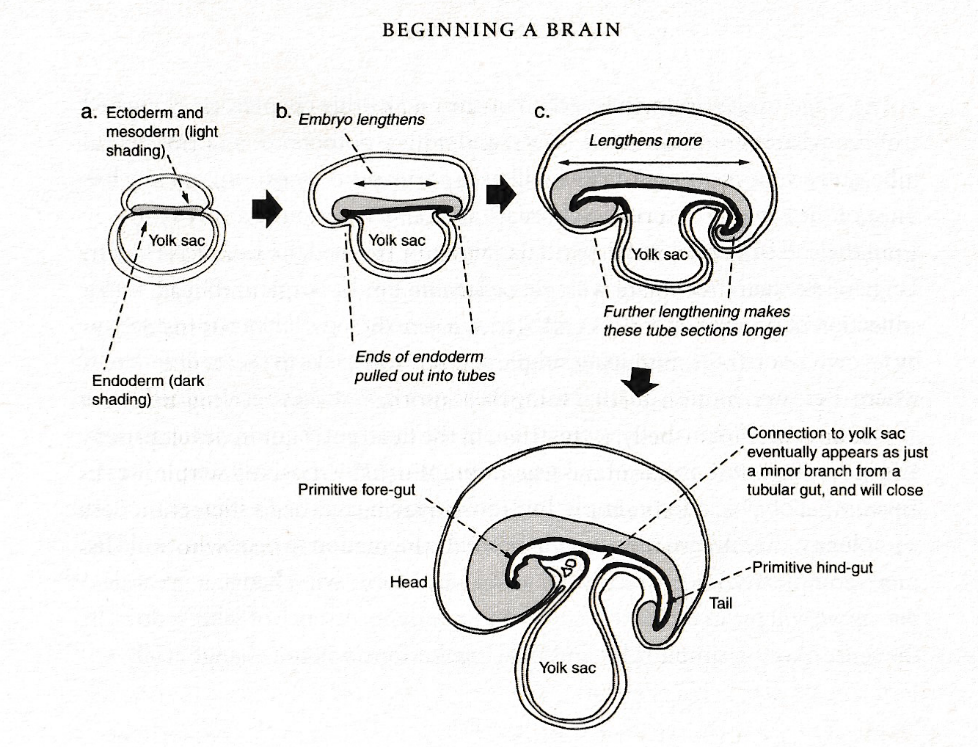
However, I think that this scenario is less likely than the one I will put forth. While it is true that humans start life as a single cell, they do this in the reproductive tract of another human, and quickly need to implant themselves into the lining of the uterus. From there, this cell develops not only into an embryo, but the structures that support it, like the amnion, a protective membrane that surrounds the embryo under the placenta, as well as things like a yolk sac and umbilical cord. While it is true that some animals have evolved regenerative abilities, those abilities are likely completely separate from the genetic code responsible for the development of an embryo into a child and then an adult. Searching the human genome to try to "turn on" the genetic sequence that allows for this kind of regeneration may be akin to trying to find the genes for an elephant's trunk somewhere in the human genome.
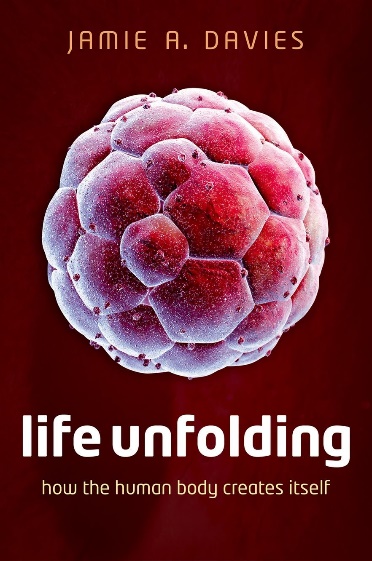
A human embryo has a heart and brain at 6 weeks. The idea that it can start with an adult sized head, and adult sized vertebra, and perhaps nothing else, and then grow a new heart and lungs and complete body, that will just magically connect to whatever severed nerve endings happen to exist, all while somehow maintaining life, seems impossible. The long nerve cells that run the length of a human body are created at birth, at the same time the brain is formed. For a complete understanding of how a single cell becomes an embryo and then a body, read the book "Life Unfolding" by Jamie A. Davis.
That said, I think, somewhere in my brain exists a rather small section that basically tells my brain which, of the finite number of "souls" it could use to perform decision making, it should use. Think of this kind of like your Google account and password being stored on your Android Smart Phone. If this data is retrieved, it can then be used to make a new body my body. Of course, my memories, the words I know, etc. Would not be available to me in the new body. The process may work less like logging in to your Google Account (which has cloud storage) and more like swapping your SIM card to a new phone. If the transfer of memories and skills and even your ability to speak and walk isn't possible, it may be that rather than revived cryonics patients being like time travelers from the past they are more like newly-born infants. They would have no memory of their past selves, and would need to relearn everything, from walking to talking to potty training.
This may create a very big dilemma for cryonics societies--revive their members as healthy, helpless infants or wait for the technology to revive their members as adults with their memories intact to be developed. I think the possibility of this situation occurring is likely enough that it should be discussed, and where possible, advanced care directives should be put into place.
If consciousness is a product of electrical activity, the substrate that conducts that electricity may not have to be biological at all. In the same way one can wire a light with aluminum or copper wire without changing its function, it may be possible to create a brain out of electronic components that not only function but house consciousness. Computers first relied on physical switches, then vacuum tubes, then transistors, integrated circuits and then microprocessors. As long as the electricity was conducted correctly, the physical substance that conducted it could be improved without changing the underlying function. Neurons might be how biology achieved consciousness, but they may be only one of many ways that consciousness can be achieved. Some have even theorized the reason the galaxy is not filled with alien life is because advanced races may reach a point in their technological development where they choose a virtual existence over a biological one.
It may be that the small portion of the brain that allows us to experience things could be encoded into a small neurological implant, similar to those already being made by Neuralink, and connected into a completely new brain inside a cloned body. To avoid having to kill one human just to be able to revive another one, the cloned body could possibly have its genes edited in such a way that it never developed a consciousness of its own. This technique, of turning off certain genes in a zygote before it divides, is already used to create "knock out mice" --animals that lack the genes used to create a specific protein, and those animals are used to let scientists study the role of that protein in the body. Like many of the technologies required for cryonic revival, the science underlying it would be important for more than cryonics. If human bodies could be created without souls, they could be used as a source of organs and even blood.
If I was going to die tomorrow, and could wake up in 50 years as a baby with no memory of my past, or wake up in 100 years as an adult with all my memories, I am not sure which option I would choose. Forgetting everyone seems like a terrible fate, but you could simply meet them again. Forgetting yourself, everything you know and all of the experiences that shaped you into who you were, may be an even greater problem. But what good would it be to remember someone if your memory of them was 100 years out of date by the time you saw them again? Or what if you had chosen cryonics but almost everyone else you knew passed away while you were frozen? You might wake up with memories of your loved ones only to find out they had all died years ago. I think this last possibility is one reason cryonics should be planned for well before it is needed, not just individually, but as whole families.
Earlier I said that, as cryonics is concerned, the method by which revival will be achieved is less important than simply having the belief that it will be achieved. Still, understanding the mechanisms behind how the brain functions and how revival may function at a scientific level can help you better predict the chance that future revival will indeed happen. Of course, no future advancements in technology may matter if the technologies used to preserve you are so crude that the information needed to revive you is lost by the time revival is possible. When the Egyptians prepared themselves for the afterlife, they left the heart in place, believing it to be the center of the soul, but they removed the brain, believing it to be a useless organ. Even Aristotle believed the brain was merely a "cooling unit" for the heart.
Legally, cryonics patients are considered dead. But all this means is that they are in a state where they can not be revived with current technology. Lots of people who are dead can be completely fine 5 minutes later, following CPR and defibrillation in the event of drowning or a dose of Narcan in the event of an overdose. While brain and nerve cells begin to die immediately after respiration ceases, the heart, liver, and kidneys can stay viable for an hour after death, and may live for decades if transplanted into a new body. Even after 3 days, some white blood cells are typically still alive.
Death, then, is a process, that can take several hours to complete, and in some situations can be reversed completely. Cryonics is a way to halt this process for decades or even centuries. Legally, the patient may be dead, but functionally they are in a kind of stasis. The molecules that comprise their cells, the entire system, from the free roaming white blood cells to the proteins that make up the axon terminal of neurons, lock in place. Only a tiny amount of atomic vibration caused by Brownian motion still occurs. But placing someone into this type of stasis is also a process, one that is performed slowly to minimize the risk of excess tissue damage, so let's now discuss the process of actually putting someone into a cryonic suspension.
Cryopreservation at Alcor Life Extension Foundation is the culmination of decades of scientific research and technological development. This process is a meticulously choreographed sequence of steps designed to preserve human life at the precise moment when current medical technology can no longer sustain it. Each phase of the process, from the declaration of legal death to long-term storage in liquid nitrogen, is guided by the latest advancements in cryobiology, chemistry, and neuroscience. In this chapter, we will explore the cryopreservation process at Alcor in granular detail, including the scientific observations that have been made by examining frozen brain tissue under a microscope, shedding light on the intricacies of this groundbreaking technology.
The first critical step in cryopreservation is stabilization. Timing is paramount; the window between legal death and the onset of cellular damage is incredibly narrow. Cellular degradation commences almost immediately after circulation ceases. Immediately upon legal death, Alcor's response team initiates rapid cooling of the patient using ice packs and cold water circulation. This process serves to decelerate the metabolic rate, effectively buying time by slowing cellular processes that would otherwise lead to degradation.
Stabilization is further supported by the use of a heart-lung resuscitator (HLR), a device designed to artificially restore blood circulation and oxygenation. Though the patient is legally dead, this circulation is crucial for preventing ischemia (insufficient blood flow) in the brain and other vital organs. By maintaining perfusion, the HLR ensures that tissues remain viable, primed for the subsequent introduction of cryoprotective agents.
The concept of immediate cooling and circulation post-death is not new in medical science, but its application in cryonics is unique. In traditional medical contexts, cooling and circulation are used in emergency medicine to extend the window of time available for resuscitation. In cryonics, however, these techniques are applied with a different goal: to prepare the body for a transition into a state of suspended animation, where biological decay is halted indefinitely.
As the patient's body is stabilized, a carefully selected combination of medications is administered to mitigate the effects of the dying process and to prepare the body for cryopreservation. Each medication serves a specific purpose, addressing potential complications that could compromise the integrity of the preserved tissues.
One of the first drugs administered is the anticoagulant Heparin. Its primary role is to prevent blood from clotting within the circulatory system, a critical consideration when blood circulation is artificially maintained by the HLR. Clotting could obstruct the flow of cryoprotectants during perfusion, leading to uneven distribution and potential damage to tissues. By ensuring that the vascular system remains open, Heparin facilitates optimal cryoprotectant delivery, ensuring that all tissues, especially the brain, are adequately preserved.
The brain, as the repository of consciousness and identity, receives special attention. Neuroprotectants, including magnesium and certain vitamins, are introduced to protect against ischemic injury and oxidative damage. These compounds help stabilize cell membranes and reduce excitotoxicity--a process in which neurons are damaged by excessive stimulation--thereby preserving the brain's intricate structure and function. Magnesium, in particular, has been shown to play a critical role in preventing calcium overload in neurons, a common consequence of ischemia that can lead to cell death.
Inflammation, a common response to injury or stress, can be detrimental during the cryopreservation process. Steroids are administered to minimize inflammation, which can cause swelling and exacerbate cellular damage. Controlling this response is crucial for maintaining the structural integrity of the tissues. In the context of cryonics, reducing inflammation is particularly important in the brain, where swelling could lead to increased intracranial pressure and further damage to neurons.
To counteract the detrimental effects of acidosis, which can occur during cardiac arrest, intravenous bicarbonate solutions are administered. The precise combination of medications and procedures will vary based on the specific circumstances of the case.
Free radicals, which can form as a result of ischemia, pose a significant threat to cellular structures. Mannitol, an antioxidant, is used to neutralize these free radicals, thereby preventing oxidative damage that could undermine the preservation process. This step is particularly important for brain preservation, where even minor oxidative damage could have profound implications. Mannitol also acts as an osmotic diuretic, reducing intracranial pressure by drawing water out of the brain tissue, which further protects against ischemic damage.
Before the full cryoprotectant solution is introduced, Dimethyl Sulfoxide, DMSO is used as an initial cryoprotective agent. DMSO's ability to penetrate cell membranes allows it to reduce ice formation during the early stages of cooling, laying the groundwork for the more concentrated cryoprotectants to be effective. DMSO has been widely studied in cryobiology for its ability to protect cells from freezing damage, and its use in the early stages of cryonics is a critical component of the preservation strategy.
The perfusion of cryoprotectants is arguably the most critical phase in the cryopreservation process. Cryoprotectants are specialized chemicals that replace water within cells, preventing the formation of ice crystals--a major cause of cellular damage in conventional freezing methods.
Alcor employs M22, a state-of-the-art cryoprotectant solution that combines ethylene glycol, propylene glycol, and other solutes designed to achieve vitrification. M22 works by penetrating cells and replacing water, thus preventing the formation of ice even as the body is cooled to cryogenic temperatures. The solution's composition is the result of extensive research, optimized to minimize toxicity while maximizing vitrification efficiency.
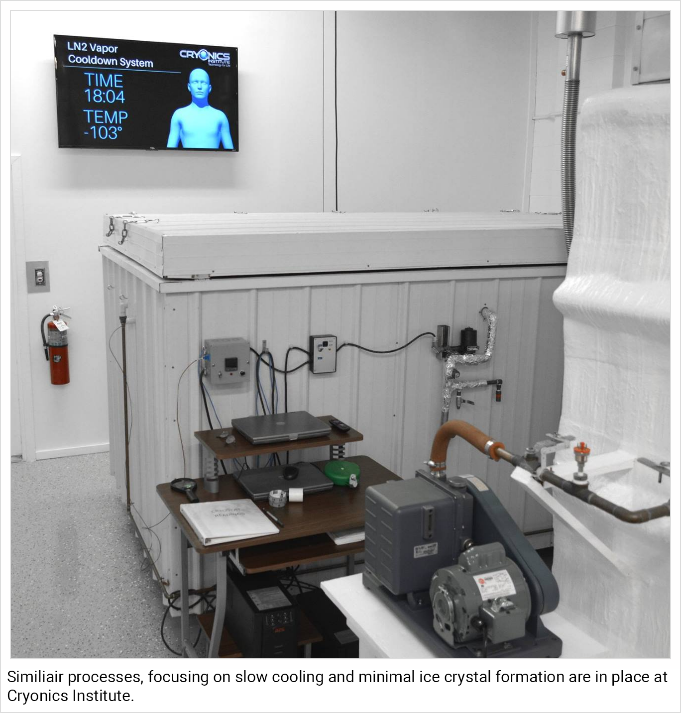
The perfusion of M22 is conducted under carefully controlled conditions. As the solution circulates through the body, it gradually replaces the water in cells with the cryoprotectant. This process is critical for ensuring that the body's tissues, particularly the brain, are preserved without the formation of damaging ice crystals. The transition to a vitrified state is monitored closely, as any deviation could result in inadequate protection and compromise the entire preservation effort.
For patients seeking only Neuropreservation, where only the head and brain are preserved, "Neuroseparation" is performed by surgical removal of the body below the neck at the level of the sixth cervical vertebra at a temperature near 0°C. The head is then perfused with cryoprotectants via the carotid and vertebral arteries prior to deep cooling.
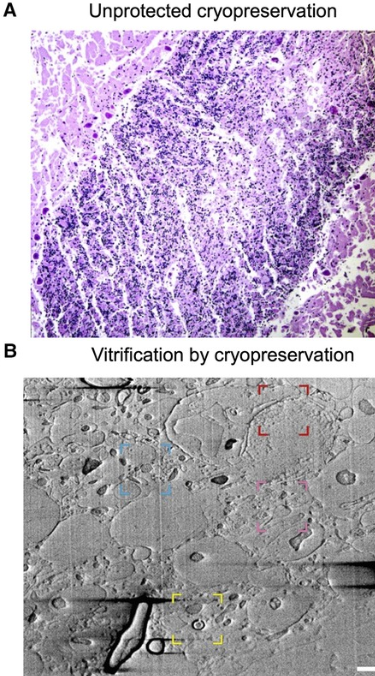
Vitrification occurs when the cryoprotectant-laden tissues are cooled to around -130°C (-202°F). At this temperature, the M22 solution solidifies into a glass-like state, effectively suspending all molecular activity. This glassy state is vital as it halts biological decay and preserves cellular structures in a pristine state for potential future revival. The transition to vitrification must be gradual to avoid thermal stress, which could cause cracking or other forms of damage. The concept of vitrification has been extensively studied in cryobiology, with researchers examining its effects on brain tissue under a microscope. Studies have shown that vitrified brain tissue retains its cellular structure with remarkable fidelity, even at ultra-low temperatures. Unlike traditional freezing, which can cause significant disruption to cell membranes and organelles, vitrification preserves the intricate architecture of neurons, synapses, and other cellular components.
One of the most significant findings from these studies is that the brain's microstructure, including the synaptic connections between neurons, remains intact after vitrification. This is a critical observation, as it suggests that the preservation process maintains the physical substrate of memory and consciousness. While the long-term viability of these structures remains a subject of ongoing research, the ability to preserve them in a glass-like state represents a major advance in the field of cryonics.
Once vitrification is complete, the body is placed in a cryostat, a specialized container designed to maintain extremely low temperatures. The cryostat is equipped with monitoring systems to ensure the consistent preservation of the body. The patient undergoes further cooling to cryogenic temperatures, typically around -196°C (-320.8°F), the boiling point of liquid nitrogen. This step is carried out slowly, over the course of several days, to prevent thermal stress that could lead to fractures in the vitrified tissues.
The patient is eventually placed in a cryogenic dewar, a specialized container designed to maintain the ultra-low temperatures required for long-term preservation. These dewars are filled with liquid nitrogen, which, due to its low boiling point, provides a stable environment without the need for mechanical refrigeration. The design of the dewars ensures that patients remain at a consistent temperature, safeguarded against fluctuations that could affect the preservation process.
The cooling process is not merely about achieving a stable temperature; it is also about ensuring that the transition from vitrification to cryogenic storage is smooth and controlled. Rapid temperature changes could cause thermal stress, leading to cracking or other forms of mechanical damage to the vitrified tissues. To prevent this, Alcor employs a slow cooling protocol, gradually lowering the temperature to minimize the risk of damage.
Observations from studies on vitrified brain tissue have provided valuable insights into this phase of the process. When brain tissue is examined under a microscope after being subjected to slow cooling, researchers have found that the structural integrity of the tissue is remarkably well-preserved. The glass-like state induced by vitrification remains stable even as the temperature is lowered to cryogenic levels, with no evidence of ice crystal formation or other types of damage typically associated with freezing.
This preservation of cellular integrity at cryogenic temperatures is a key factor in the potential for future revival. The fact that the brain's microstructure remains intact suggests that the information encoded in the neural networks--the physical basis of memory and consciousness--are preserved as well. While the ability to restore these functions is still beyond current technological capabilities, the preservation of the brain's physical structure offers hope that future advancements will one day make revival possible.
In the final stage, the cryopreserved patient is stored upside-down within the dewar. This orientation is chosen to minimize the risk of any potential damage should minor temperature variations occur at the top of the dewar, where gas-phase nitrogen may be slightly warmer than the liquid phase at the bottom. The patients are surrounded by a stable, ultra-cold environment that maintains their vitrified state indefinitely.
Alcor's facility is designed with redundancy in mind. Liquid nitrogen levels are regularly monitored and replenished to ensure that the cryogenic temperatures are consistently maintained. Backup systems are in place to address any potential emergencies, such as power outages or equipment failures, ensuring that the preservation process remains uninterrupted. The long-term storage of patients in this cryogenic state is the ultimate goal of the cryonics process. By halting biological decay at such low temperatures, Alcor preserves not just the body, but the potential for future revival, when advancements in medical technology might make it possible to repair the damage that led to death and restore life.
The long-term effects of cryogenic storage on brain tissue have also been a subject of study. Researchers have found that brain tissue stored at cryogenic temperatures shows no signs of degradation over time. Even after years of storage, the tissue retains its vitrified state, with no evidence of ice formation or other types of damage. This finding supports the idea that cryogenic preservation is a viable method for long-term storage of the brain, maintaining its structural integrity for potentially indefinite periods.
One of the most fascinating aspects of these studies is the observation that the vitrified brain tissue remains stable even at the molecular level. The proteins, lipids, and other molecules that make up the brain's cellular structure are preserved in their original configuration, with no signs of denaturation or other forms of degradation. This molecular stability is critical for the preservation of the brain's function, as it suggests that the biochemical processes underlying memory and consciousness are also preserved.
The cryopreservation process at Alcor represents the cutting edge of cryonics technology, combining decades of research in cryobiology, chemistry, and neuroscience to achieve a state of preservation that was once thought impossible. From the meticulous stabilization and administration of protective medications to the sophisticated perfusion of cryoprotectants and the careful cooling to cryogenic temperatures, each step in the process is designed to preserve not just the body, but the potential for future revival.
The scientific observations made by examining vitrified brain tissue under a microscope have provided valuable insights into the effectiveness of this process. The preservation of the brain's microstructure, the stability of its molecular components, and the prevention of ice formation all point to the possibility that the information encoded in the brain is all preserved for future revival. While the full potential of cryonics remains to be realized, the advancements made by Alcor and the broader scientific community offer a glimpse into a future where death is no longer the end of life, but rather a pause, awaiting the day when technology can restore what was lost.
In life, we tend to think of the things we do as choices. But not making a choice is also a choice. If someone decides that now is not a good time for them to get solar panels on their home, implicit in that lack of decision is the assumption they will stay with the power company. Practically, there is no difference between choosing not to do something and choosing to wait to do something. I have heard people say they will sign up for cryonics after they successfully bring a person back.
Well yes. At that point cryonics will go from being experimental medicine to just regular medicine. At that point, hundreds of millions of people may look to have their bodies frozen and replaced, for reasons ranging from disability to disease to simple old age. Saying you'll sign up for cryonics after you know it works is a little like buying a scratch off ticket if you get to scratch it first and make sure it is a winner. Anyone would make that choice. But that may not be the choice you are given.
Eventually death will come, and it may come before anyone is revived. Death will happen, with or without warning. The decision then, ultimately is between cryonics and death.
Which makes it a choice between an uncertain outcome and an unknown. Much like the question of "why are we the we that we are?", what happens after we die is a question science gives us little answer to. Earlier I said that, since I am alive now, I think it is, at least logical, to think I may have been alive before this life, and I may be alive again after this one.
But that is, essentially, just a guess. Scientists think the universe is 13.8 billion years old, and that life on earth started 3.7 billion years ago. Modern humans only appeared about 300,000 years ago. But that is just the life on one planet. Up until a hundred years ago, scientists thought there was only 1 galaxy. Today they estimate the number of galaxies in the observable universe that we can see to be over 200 billion. That is just the number of galaxies, with each galaxy having around a trillion planets. Earth has about 8 billion people. It has 27 billion chickens.
Are those chickens sentient? I don't know. There are almost a billion dogs. Are they sentient? I can't say for sure, but I know I act as if they are. It is possible that chickens' brains are hardwired, like nematodes. It is, at least possible, that souls are a relatively new invention; that what has allowed humans to obtain language and religion and writing and scientific progress over the last 300,000 years is that they alone, among all lifeforms, are sentient.
However, I don't think science supports this. Neanderthals were close enough to humans that the two species are thought to have interbred. Evidence also suggests that Neanderthals created cave paintings, and buried their dead.
Plus, there are many reasons that modern humans were able to take over the world, and many of them are known, and don't seem to indicate that humans are different in kind to other animals. Humans seem to have got their first big boost when they moved from the jungle, where they had lived on fruits, and spread out to the savanna, where they began scavenging for meat. The carcasses of animals like elephants, which they cut apart with flint stones, gave them a source of protein and fat, and allowed for tremendous brain development. Eventually they learned to control fire, allowing them to absorb even more protein from this meat, while also killing harmful bacteria. Later they obtained agriculture, and domesticated animals. Speech and writing allowed knowledge to pass between individuals and generations, as well as the coordination of large groups.
Human society is also somewhat unique in how sexual selection occurs. In most societies, marriages are either arranged between families, or females will select a partner from a pool of "successful" men. What does "successful" mean? Well, that is generally up to the woman to decide, but it allows for human men to excel in any of a vast number of possible domains. A good husband might be a good farmer, a good warrior, a good scientist or the child of a rich family. But the process is a lot more sophisticated than say, the way in which deer or goats mate, where the men battle, sometimes to the death, in what is basically a competition of strength, with the winners getting to mate with the females.
This is also completely different than how chimpanzee mating works. Chimpanzee societies are generally led by an alpha male, and while that doesn't mean he is always the strongest or most intimidating, it does generally mean that chimpanzee tribes war with each other, rather than trade or cooperate. It is hard, and perhaps even undesirable, to make progress as a species if nature requires you to compete against your own species. Of course, humans also have the capacity for murder and war and even genocide, but this is merely one option among many they can choose, and one increasingly seen as a last resort and a net-negative, especially in the 21st century.
Humans are not unique in using tools. Gorillas can learn sign language, and whales and dolphins "talk" to each other. So, if humans are not fundamentally different from animals, and descended from them, if reincarnation happens, it seems likely that one could reincarnate as any one of a number of different species. Indeed, one may already have, perhaps several or even thousands of times over the last billion years. Both Hindus and Buddhists believe in reincarnation and that a person may be reincarnated as an animal. The official scientific explanation of what happens after we die, that we are conscious only because of the neurochemical activity in our brain and cease to exist after it is destroyed, is perhaps even less palatable and harder to comprehend intellectually. What does it mean to experience "nothing" for the rest of eternity, and why do we experience anything now? Weren't our brains just random molecules of stuff before they were assembled by some random embryo that happened to be "us"?
I suppose it is possible, that there is a heaven, if not the one described in the Bible, the state of being dead may seem heavenly compared to being alive. Biological life-forms need food, warmth and shelter for survival, but the pain and discomfort we experience from not having those things might just be how our biological bodies prod us into helping them reproduce. Instead of "being human", we may be imprisoned inside one, like an ox tethered to a plow from birth. But if there may be a heaven, there may then too be a hell. Being dead could be painful, or boring, or painfully boring, eons spent waiting to respawn, only to come back as a fish somewhere in the Andromeda galaxy, or a lab rat in some scientist's cage.
Cryonics biggest benefit then may be that it saves us from the unknown fate of death. It is a way for us to keep our existence as a living human here on earth. Science will one day likely be able to explain what it is we experience after death, but accepting death is not a decision that can be unmade. That reason alone should give great pause to anyone considering not doing cryonics, or waiting until it may be too late.
People spend thousands of hours learning how to walk and talk and read and write. They spend years developing their personalities, their ideas, their sense of right and wrong, on forming relationships and finding purpose and trying to stay in good health. Only so death can wipe out this progress.
Memories appear to be stored in the brain through the connections between neurons. There is currently no way to completely decode this tangled mess of neurons to see what memories a person has stored. However, science has already begun to unravel the mysteries of the brain. Functional MRI and PET scans have allowed scientists to peer inside the brain. Far from being a homogenous mass of neurons, everyone's brain seems to follow roughly the same blueprint, with different regions being responsible for different tasks, and those same regions existing for almost everyone. By studying those with certain brain injuries and tumors, scientists have been able to see what areas of the brain are responsible for certain functions. Only certain parts of the brain are responsible for memory storage - other sections handle tasks like image processing, speech, and problem solving.
Science should one day be able to decode the memories stored inside the brains of cryonics patients. Whether these memories will be able to be given back to the revived patient will likely depend on the technology used to revive them. However, each cryonic patient's brain is essentially a time-capsule, filled with everything from news events to song lyrics. Even the chance that one could keep their memories and retain them in the future is a tremendous value.
And not only will cryonics patients perhaps be able to keep their memories, but with proper planning they may be able to keep a large portion of their wealth. Cryonics patients may have decades of relatively expense-free living, during which time the power of compound interest should see their estates grow. This feature of cryonics should be especially attractive for those who spent much of their time and much of their youth building wealth. Cryonics provides a way to buy back not only time but also one's youth.
And cryonics allows families to stay together. Not just people, but even pets can be saved by cryonics. To date, over a hundred pets have been frozen just between Alcor and Cryonics Institute.
If society progresses to the point where it discovers that "all souls are the same", the law may require that these sentient animals be brought back to life in human bodies. This realization could drastically change how humans view animals, and practices like factory farming and even pet ownership could someday be viewed in the same way most modern societies now view slavery or the holocaust. In such cases, it is doubtful that any effort would be made to try and preserve their memories, and perhaps even the fact that they were revived in the future only because they were some woman's beloved cat would be kept from them. Still, the idea that someone would love their pet enough they would spend thousands of dollars and wait decades to reunite with it in the future shows the lengths that people are willing to go to preserve the bonds with their loved ones.
While the idea of reuniting with your loved ones after you die is comforting, it is hard to see from a scientific standpoint how this would be possible. Unless the universe is controlled by something like an omnipotent God, or unless there is some secret humans don't know, like we are all in a giant computer simulation, when one considers the vastness of either space or time, it seems unlikely that we will ever again see the people we have known, our parents and children and spouses and friends, and even less likely we could somehow recognize them or even remember this life. But cryonics gives us a way to stay together and someday reunite with our loved ones. A way whose explanation is based on more than just faith.
Cryonics also has the potential to take the "randomness" out of the genetic lottery that we were all forced to play when we were born. People are born every day who are never able to walk, never able to see, or destined to die at a young age. Fixing these conditions can be as simple as fixing a single gene, or even just having a healthy birth. Gene-edited babies have already been born, but the practice is widely illegal. However, the practice may be common by the time cryonics patients are revived. It is simply easier and better to change the genes of an embryo than to allow a medical condition to develop and then attempt to manage it with drugs later in life. And once this method is used to remove genetic diseases and predispositions for things like cancer or heart disease, it will likely be used to select for desirable traits as well. After all, if one wanted to reduce the risk of heart disease, a good approach would be to select against genes that increase obesity. And make sure height is within an ideal range. And once genetically engineered babies are already tall and fit, why not make them smart as well?
Instead of gene modification being seen as unethical, future societies will likely see the idea of letting a person be born with an IQ of 60 as cruel to that individual and burdensome to society. Today 31 states in America have compulsory sterilization laws on the books, and it was only in 1967, in the case Loving v. Virginia, that the Supreme Court ruled that laws against interracial marriage were unconstitutional. America has a long history of trying to manipulate the genetic makeup of its population, including the near genocide of the Native Americans, and the idea that future governments will seek not to improve the genetics of their populations as well, to reduce health care costs and suffering, and to stay internationally competitive, seems naive considering America's dark history of racism and eugenics.
Cryonics may give patients a way to choose everything from their eye color to their biological gender. In America alone, over 1 million people don't "identify" with their gender assigned at birth. This may be a relatively new phenomenon, or it may simply be that society's growing acceptance has brought light to a once-hidden issue. Either way, cryonics could simply let patients pick what gender they wish to be. Instead of concepts like race and ethnicity being lines along which groups of people divide themselves, in the future, they may simply be preferences one is free to choose, similar to how one can customize their character at the start of many modern video games.
And especially if cryonics patients are revived into new bodies, it is likely their new bodies will be much healthier than their original bodies were, perhaps healthier than anyone born today. These new bodies may age at a slower rate, or not age past a certain point at all. Even if cryonics is achieved by programming existing bodies to repair themselves, the way Alcor envisions, these changes to the genome will likely provide for incredible resilience, and cause aging to not only cease, but progress backwards so that a permanent middle-adulthood is achieved.
And cryonics comes with another benefit, namely that the future will likely be better than the present. I was born in 1986, the same year Super Mario came out on Nintendo in the US. Already in my life I have witnessed the birth of the internet, cell phones and AI. I remember growing up with 4 channels on the television, watching reruns and playing the same 10 Nintendo games for hours on end. The world isn't perfect. Incarceration in the US increased 800 percent from 1975 to 2020, from 200,000 people to 1.6 million people. 1.3 million people died last year of tuberculosis, despite the fact it's treatable. Over 100,000 died of drug overdose in just the US, and about half that many committed suicide. Wealth inequality is the highest it has ever been, and the rise of AI may reduce the value of labor to the point where it will be impossible to achieve upward mobility, or even survive, by working.
However, despite these problems, the world is about as good as it has ever been. One could fill a book with the ways in which life is better now than it was even 50 years ago, and indeed, someone has. "Enlightenment Now" by Steven Pinker provides dozens of ways in which the world has improved. While life expectancy may be the most dramatic statistic, everything from vehicle deaths per miles driven to pedestrian deaths to lightening deaths have fallen from the 1900's to today. Plus, the percentage of income we spend on necessities has fallen while wealth overall has increased dramatically. Access to information through the internet and cell phones, forums and messaging apps, and online video and low-cost publishing is the highest in human history. Plus, inventions like electric lighting, heating, air conditioning and plumbing have created a new age of comfort.
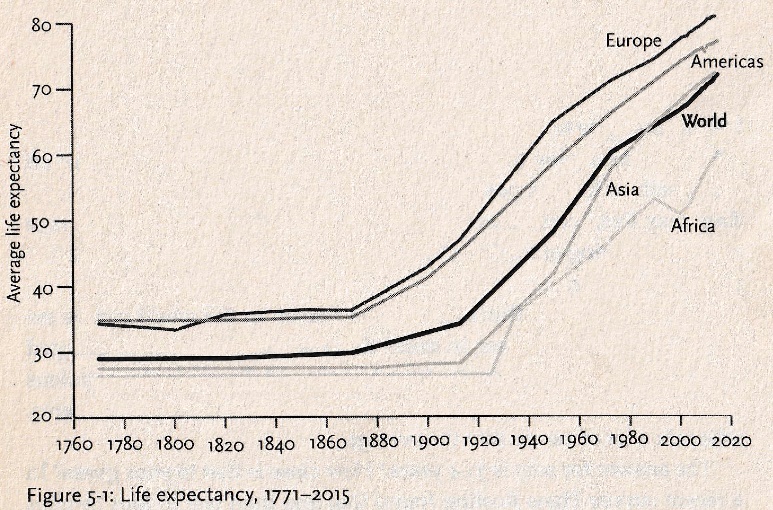
Average life expectancy has gone from 40 years in the 1900s to almost 80 years today.
You are less likely to be murdered, raped, enslaved or executed now than any time in history. People are richer, healthier, more intelligent, better educated and consume more calories than ever before. Billions of dollars are being invested into nuclear fusion, which may provide nearly limitless cheap energy. Materials like graphene may make space travel possible without the need for rockets. The idea of a "space elevator", a 22,000-mile-long cable that reaches into space and allows vehicles to leave earth's orbit by traveling up it, has been around about as long as cryonics, but constructing one requires materials that are currently too expensive to produce at scale. But in another 50 years, much of today's science fiction will be science fact - much like how Star Trek's communicators are now our cell phones.
Far from simply getting to live life over, today's cryonics patients can expect to live in a world of amazing new technologies and discoveries. And, they may be revived at a time when lifespans are measured in the hundreds or even thousands of years. There is already the idea in science that one could "live long enough to live forever" - that average life spans will eventually increase faster than the rate at which people age. Progress may occur exponentially rather than linearly, as one generation of breakthroughs, like computers and the internet, increases the speed of the next generation of breakthroughs, like AI and genetic engineering. AI is already being used to solve incredibly hard tasks in mathematics and biology. Future AI could even reach the point where it is able to better develop AI than humans are, and could then theoretically create progressively better versions of itself!
Instead of going to school and working to "pay the bills", life in the future may be spent colonizing space while being waited on by robots. Things like universal basic income might be given to everyone at birth, with all work being done by robots and AI, powered with the near limitless clean-energy from fusion.
Earlier I stated that accepting that cryonics would work, that cryogenic revival was not only possible but likely, came at a cost. It created the problem of needing to actually sign up, to pay for the service, to research companies and choose one and to make arrangements to actually receive the service.
These are all basically problems. They are to-do list items, they are expenses, they are sacrifices that must be made in the present to receive some possible reward in the future.
In the last chapter, I talked about the benefits of cryonics. These are the benefits the technology provides after revival occurs. But I think that cryonics provides another set of benefits. These are the benefits that come from knowing that one's time on earth isn't limited to a fixed number of years, that we are not powerless to stop death, either our own or our loved ones, that even if we didn't get the life we wanted, a do-over is possible.
This knowledge can completely change how we look not only at death, but life. People today, those not born into wealth, are generally faced with a bad choice - enjoy life while they are young and healthy, or work to save and invest money in hopes that they will be healthy enough in old age to enjoy their retirement. Many people sacrifice the future to make sure they enjoy the present. The idea of working 40 years to perhaps someday retire is being rejected by more and more people, and even for those who try, this approach doesn't always work out. Roughly 20% of men will die before the age of retirement, and even more will reach that age in poor health with few years of total life left to enjoy.
But cryonics changes the math. Someone who spends the first 40 years of their life to surpass the million-dollar mark and uses a portion of this money to fund their cryonic preservation may not only be able to "buy back" the years they spent working, but they may be able to obtain many, perhaps hundreds, of more years than they were given at birth! And unlike today, where the payoff is being rich and old, cryonics patients can look forward to being rich and young, a status held today by a relatively few lucky individuals, many of whom were simply lucky enough to be the children of rich parents.
We all play the "genetic lottery" when we are born, in that the genes that determine our health, physical appearance, intelligence and even our temperament and lifespan are assigned to us largely at random, based on the genes of our parents --parents who are also decided, as far as anyone knows, randomly. But luck also determines where we are born, whether our parents are rich or poor, and when we are born, whether we will live through peace or war, freedom or tyranny.
Ethicists have attacked cryonics on the grounds that wealthy individuals will be able to use their wealth to perhaps extend their lives indefinitely. The same attack has been made against the gene editing of humans, that the rich will be able to have children that are not only wealthy, but biologically superior to those of parents who can't afford the technology. But while cryonics could increase inequality, it could also provide a new level of fairness to an already unfair system. Especially if acceptance of cryonics grew to the point where it was seen as just another medical procedure, millions could have the expense of the process covered by their existing health insurance.
Many people decide that their lives are not worth living. The idea that, no matter what someone does, they are just going to die anyway, can be freeing, but it can also lead to the idea that, especially if one's life is not particularly enjoyable, or completely miserable, that dying soon, or even committing suicide, will do nothing more than hasten what is already inevitable. But we may be on the cusp of achieving immortality as a species, and everything that happens in our lives and every decision we make may seem insignificant compared to the decision to preserve one's life as long as possible.
Cryonics can not only provide hope for the future, but it can also provide comfort to those facing death. Especially if we only perceive time while we are alive, waking up in the future may feel like it happens seconds later. One may die only to find themselves staring at the loading bar of their new Neurolink implant while a nurse explains to them that they died 50 years ago. That thought, that even though you are dying you are safe, might allow one to view death not with fear but curiosity. Even if one's memories were lost, and they came back in a state of confusion, one would imagine that revived cryonics patients would receive a great deal of support. It may even be possible to awaken someone in a virtual environment prior to restoring their body.
Cryonics requires an investment of time and money. Thankfully, the investment is not so much that only the rich can currently take advantage of cryonics. If cryonics was so expensive that one had to endure significant hardship in the present for the possible chance of being revived in the future, the decision may not make sense. Thankfully, for possibly under $30,000, one can pay for both their lifetime membership with Cryonics Institute and for their cryopreservation and perpetual storage. This is for full body preservation! Realistically, more like $80,000 to $130,000 should be set aside, to ensure that one also has "stand by" support; that someone will actually arrive at the hospital and perfuse them at the time of death. Cryonics is cheap enough that a few lucky people have been able to pay for their cryonic preservation through the donations of others. Since cryonic preservation is only required at the time of death, it is also uniquely well suited for being funded with life insurance. In chapter IX we will discuss how one can pay for cryonics, but first one must decide on what services they are looking for and which company they want to perform those services. In general, cryopreservation can be divided into 2 types - full body preservation and neuropreservation, which only preserves the patient's brain and head.
If the brain is the seat of consciousness and houses our memories and personality, why even bother freezing one's whole-body? Especially if one is already sick and old, and the body can be expected to be damaged even more by the processes of perfusion, vitrification and thawing, wouldn't it be easier and less expensive to only preserve the head and brain? "Neuropreservation" is the low temperature preservation of the brain of a cryonics patient. All efforts in neuropreservation are devoted to the singular purpose of preserving the brain, and only the brain, in the best possible condition allowed by present technology.
A compromised circulatory system in whole-body patients may result in poorer perfusion. Whole-body cryoprotection requires a thicker vitrification solution to prevent edema, so, all else being equal, perfusion of "neuro" (head and brain only) patients can be completed in less time, or lessen ice formation in the same perfusion time. Focusing on the brain optimizes brain cryoprotection, and allows for separate monitoring of venous cryoprotectant concentration from left and right brain hemispheres, while he cryoprotectant concentration for whole-body patients is measured from an average venous concentration of the body as a whole. Neuro patients also get improved venous drainage due to lower venous pressure, which improves cryoprotectant perfusion.
So, if the end result is the same, being revived in a new body, is it safe to choose neuropreservation and discard one's old body? Part of the difficulty in answering this question is that no one knows for certain how revival will be achieved. Much like the Egyptian pharaohs who removed the useless ball of stuff in their skull before preparing for the afterlife, future scientists may lament the fact that so many cryonics patients have chosen to discard their bodies, especially if the technologies that Alcor envisions to allow the body to repair itself become a reality.
The human body is divided into the central nervous system and the peripheral nervous system, which includes the autonomic nervous system. Neuropreservation discards part of the central nervous system (by cutting the spine at the 6th vertebrae) and discards most of the peripheral nervous system (as well as sophisticated structures like the voice box and vocal cords required for speech). These systems are what allow the brain to communicate with the body. The muscle memory that allows us to do everything from speaking to riding a bike may depend on the neurons that run throughout our body to be configured in a specific way. While one might think that a genetically identical body would also be identical in this regard, that may not be the case. Identical twins do not have identical fingerprints - they have the same genes, but the genes only tell our bodies how to make a fingerprint, not what specific fingerprint to make. During development, the brain calibrates itself to the body in which it inhabits. This process is tremendously important. A person who genetically may be 6-foot-tall may only grow to 5'6" due to sickness or malnourishment, but the brain learns to walk on the legs they have, whatever length those legs happen to be. It may be that patients who freeze only their heads will only have the option to be revived in completely new bodies, perhaps even losing their memories in the process, while whole-body patients will be able to have their bodies repaired and programmed to regenerate themselves.
However, saving the whole body comes at a cost. At Alcor, whole-body patients use about 9 times the liquid nitrogen of neuro patients. A clause in the contract that all members of Alcor must sign states that, in case of a financial emergency, all whole-body patients will be converted to neuro patients. Whole-body patients are also much harder to move. This could protect against the weird situation where someone would try to steal a frozen cryonics patient, but it makes it much harder to relocate patients in an emergency.
There seems to be no obviously "right" decision, and this is reflected in the choices made by the patients at Alcor, where %51 have opted for whole-body preservation. For those with the money, it is possible to have the head preserved separately from the body. This option is still not perfect, as it requires the spinal cord to be separated, but it combines some of the advantages of neuropreservation with some of the advantages of whole-body preservation. One downside I can see with this technique is that, at least at Alcor where all patients have a clause allowing for whole-body patients to become neuro patients, the first thing any troubled cryonics society would likely rid themselves of are the disconnected bodies of its neuro patients. The cost of perpetually storing bodies which may never be needed may even be seen as less important than maintaining frozen pets.
Officially, Alcor and its employees do not make recommendations to members about which method they should choose, though they do warn that neuro patients may be more likely to need physical therapy upon revival. Cryonics Institute on the other hand primarily does whole-body preservation.
The biggest factor to consider may be how healthy one's body can be expected to be when frozen. An otherwise healthy child who dies from something like viral encephalitis could benefit from whole-body preservation a lot more than an eighty-year-old man with stage 4 cancer who is morbidly obese. Family members, and especially children, may feel better about the cryonics process if it does not include decapitation as well. Ultimately though, any cryonic procedure seems better than none at all. Whole-body cryopreservation at Cryonic Institute is actually cheaper than neuropreservation at Alcor, providing a solid reason for someone set on whole-body preservation to choose the latter organization.
Rudi Hoffman, the World's leading cryonics insurer, wrote a book called "The Affordable Immortal" (Hoffman, 2018). The book discusses how cryonics can be financially feasible for most people who are fairly healthy, through the purchase of life insurance. Using this method, it is possible to arrange for cryonic preservation at the time of your death in only a couple weeks! His follow up book, "The Cryonics Estate Planning Handbook" released in 2021 may be worth the read for those looking to further pursue cryonics.
How? Well, term life insurance only pays IF you die during the term. The reason a 37-year-old man can get hundreds of thousands of dollars of coverage for only a dollar or two a day is because it is statistically very unlikely he will die before a ten or even twenty-year term is up. If he survives the term, he receives nothing, not even the premiums he paid. While this is a considerable downside, it does allow one to cheaply cover the risk of unexpected death in the short-term while other money is set aside for the long term. The money paid as premiums are invested by the insurance company. So, even in the case of whole-life insurance, which costs more but does not expire, paying 30 years of premiums to receive a payout possibly 60 years down the road gives a lot of time for interest to accrue.
However, inflation also needs to be considered when using insurance to pay for something needed at an unknown date in the future. In 1994, Alcor charged $120,000 for the same cryopreservation they now charge $200,000 for. One advantage to paying Alcor now is that your money will be invested, so as the price of cryonics services rises over time, your benefits will still be locked in. Another benefit of paying for cryonics, which also applies to life insurance, is that it is generally lawsuit and bankruptcy proof. If you are sued, your assets seized or liquidated as part of a bankruptcy proceeding, your cryonics coverage is safe. In this way, cryonics is something that you really only do have to buy once in your lifetime, even more so than something like a home which can be taken and sold or a college degree that can become outdated or irrelevant over time.
So, if you have $200,000, what is better - to pay Alcor directly or to purchase life insurance?
Well, if you are dying soon, that is probably the best option. If you don't have the cash, life insurance, either whole or term, is likely the best method, though inflation must be considered. As prices rise, the price of suspension and cryonics services can be expected to increase, and this must be factored into one's calculations. Over-insuring oneself, to cover not only today's price but the price in the future of services is a must, which is why some people with the funds available opt to forgo life insurance and directly pay the cryonics company of their choice at the current price. Once paid, the cryonics company agrees to cover suspension and storage, regardless of any future price increases.
In the early days of cryonics, there simply where no companies providing cryopreservation services. After Robert C.W. Ettinger published "The Prospect of Immortality", "Life Extension Societies" and "Cryonics Societies" began to be created in several states. The Cryonics Society of California, who would go on to freeze the first true cryonics patient, was founded in 1966 by its first president Robert "Bob" Nelson . While this organization froze Dr. James Bedford, who remains safely stored at Alcor to this day, they also froze several other patients in the early days of cryonics, who were not as lucky.
Marie Phelps-Sweet was the second cryonics patient and first female cryonics patient . She was part of a group of patients frozen by Robert Nelson. After two years of attempting to keep her and other patients frozen, the funds of CFC ran out, and she and her two cohorts were left to thaw. Most of the early patients of cryonics met this fate, including Geneviève de la Poterie, the first cryopreserved child.
The case of Geneviève is particularly sad, as she died from a wilms tumor, a type of cancer that, with modern medicine now has a 95% 5-year survival rate. Even though she died in full renal failure, her condition, young age and immediate preservation at the time of death all made it likely she would have been successfully revived.
Bob Nelson had hoped that, by putting C.W. Ettinger's theory into practice, he would speed up the adoption of cryonics and save patients who otherwise would not be saved. While it is hard to know what effects waiting would have had on the industry, Bob Nelson's decision to move forward caused a rift between cryonics and cryogenicists and cryobiologists that exists to this day. This rift is more than unfortunate, it has created a situation where the very scientists who should be advancing and promoting the field of cryonics instead have posted on the Cryogenic Society of America's website: "We wish to clarify that cryogenics, which deals with extremely low temperatures, has no connection with cryonics, the belief that a person's body or body parts can be frozen at death, stored in a cryogenic vessel, and later brought back to life. We do NOT endorse this belief, and indeed find it untenable" .
This would be as though, instead of physicists in the 1940s and 1950s racing to create new elements on the periodic table, they instead viewed the process as a kind of pseudoscientific speculation, and left unfunded amateurs to attempt to carry out the search for new elements on their own. Without the resources of these scientists in the field and the resources of their universities, these physicists would be essentially right in insisting that there are no elements 97 and 98 and that any attempt to make them or other elements "are untenable". To be fair, the Cryogenic Society of America stops short of saying cryonic revival will be impossible. But their lack of endorsement has undeniably swayed many from taking the process seriously and prevented the kind of funding into research that would make the chance of revival more likely.
In the early days of cryonics, this was not the case. The Cryonics Society of California had a scientific advisory board consisting of members in the fields of cryogenics and cryobiology. But this board dissolved when Bob Nelson made the choice to freeze James Bedford. With the benefit of hindsight, we can say that this decision was likely a mistake, perhaps benefiting no one besides James Bedford himself. While the procedure at least demonstrated that cryopreservation was possible, without the backing of scientists in the field, many were skeptical that revival would ever be possible. Bob Nelson was sued and faced financial ruin. He died at 81, and was frozen without perfusion at Cryonics Institute, becoming patient 170
Perhaps the biggest problem in the early days of Cryonics was that virtually no one had set aside adequate funds for their long-term suspension. Not only does cryonics require an indefinite amount of liquid nitrogen, it also requires expensive containers to hold that liquid nitrogen and minimize the rate at which it boils off. Cryonics also requires someone to undertake the task of refilling and maintaining these vessels, plus monitoring and securing them. Cryonics founders essentially tried to operate like a pyramid scheme - expecting a boom in cryonics popularity, they undertook the expensive obligation of freezing patients for little or no money, expecting that later patients and donors would come along to subsidize earlier patients. Perhaps it is good that this unsustainable practice failed in its infancy - had hundreds or even thousands of patients been frozen under this model, it's inevitable collapse could have claimed far more lives than the few who died under Robert Nelson's care.
Today, when a patient contracts with a reputable cryonics company, a portion of the money that they pay is invested, creating a stream of revenue that pays for maintaining their cryopreservation. This method is not foolproof - bad investments, hyperinflation, or the mismanagement of funds could see patients' funds diminish until they are not even enough to cover their perpetual suspension, but it is far better than having new patients subsidize earlier patients.
In the United States, there are basically two cryonics companies, Alcor and Cryonics Institute. Both are non-profit organizations dedicated to advancing the science and practice of cryonics.
Alcor, or more formally the Alcor Life Extension Foundation, was founded in 1972, Alcor offers cryonics preservation services, research, and education. Their mission is to preserve life at the cellular level by freezing individuals who have been legally declared dead. Alcor's services include neuropreservation, where only the head is preserved, and whole-body preservation. Alcor also conducts research to improve cryonics techniques and advocates for public education on the topic.
The Cryonics Institute (CI) was founded in 1976, CI shares a similar mission with Alcor, aiming to preserve life through cryonics. However, CI has a different approach to cryonics, focusing on a more minimalist and affordable option.
CI offers a basic cryonics preservation service that involves cooling the body to a very low temperature and storing it in a specialized container. Unlike Alcor, CI does not offer neuropreservation, and their services are generally less comprehensive. CI also conducts research and education on cryonics, but on a smaller scale compared to Alcor. Ettinger played a pivotal role in the founding and early development of The Cryonics Institute (CI). Ettinger was a pioneer in the field of cryonics, having written the influential book "The Prospect of Immortality" in 1964. Ettinger's vision and enthusiasm were instrumental in establishing CI and guiding its early direction. As a founding member and president of CI, Ettinger was deeply involved in the organization's operations. He helped to develop its policies, procedures, and infrastructure, and played a key role in securing funding and public support. Ettinger's contributions to CI were significant, and his legacy continues to influence the field of cryonics.
Both Alcor and The Cryonics Institute play important roles in the field of cryonics, offering different levels of service and approaches to preserving life. Of the two, Alcor is generally more expensive, but that price difference decreases somewhat if one adds in the cost of stand by and transport services. Alcor includes standby support, even with it's $80,000 neuropreservation option. Standby support adds $88,000 to Cryonics Institute's otherwise reasonable $30,000 price tag, but without standby support, one may essentially receive no perfusion, as was the case with Robert Nelson. Without perfusion, simply relying on a funeral director to pack you in dry ice and send you to Michigan, it is unclear whether revival will ever be possible.
You only get one life, and while any cryonic procedure may be better than none at all, standby care may be necessary to have a chance at future revival. Thankfully, those who are not currently planning on dying have the option to pay with cryonics through a life insurance policy, and those who are dying have the option to relocate near their cryonics facility, possibly eliminating the expense of standby care.
The Need for a new Cryonics Society
Alcor and Cryonics Institute are currently the best two choices for anyone looking into cryonics. However, neither organization is perfect.
First, both mainly store patients within a single state at a single location. This creates logistical problems first in getting a patient to the actual facility. Whole body patients generally require a transit permit when being transported across state lines. This can require that the death certificate be first signed and filed.
They also do almost no advertising. While many people think of advertising as the art of selling people things they don't need, advertising is also generally how the public becomes aware of a product or service. Imagine if after perfecting their designs and setting up their factories, early car companies made no effort to actually sell cars to consumers. The idea of a nonprofit automobile society existing to provide its members with safe, affordable cars at low cost sounds good on paper, but it was capitalism that saw America become a nation of drivers.
Alcor's business model is setup so that its continued survival is ensured through investments. However, profit provides an incentive for investors. Investment allows for expansion and scale in a way that altruism does not.
I envision a cryonics society whose founding members receive part of the company as shares in exchange for paying for long-lasting infrastructure. This will allow the initial members to make a profit, but this profit will come not from charging its members more, but from enabling cryonics to be provided at scale.
By simply increasing the size of its containers, one can decrease the surface area to volume ratio. This is critical, as cryonics vessels gain heat (lose their coldness) based on their surface area, but store patients based on their volume. The center of the vessel essentially loses no heat, as the ambient temperature around it is just as cold as the center. Heat is lost only through the sides, and mainly through the top, which can not be completely sealed because it needs to vent the pressure from the liquid nitrogen that turns into gaseous nitrogen.
Also, cryonics services are currently not transferrable. It is easy to imagine a situation where a man who paid for cryonics in his early twenties due to a win at the "crypto casino", may with to transfer that service to a dying spouse, child or parent.
International
The realm of cryonics, where bodies or brains are preserved at extremely low temperatures with the hope of future revival, often intersects with the complexities of medical ethics and legal rights. This intersection is particularly evident in the recurring clashes between cryonics organizations and legal authorities over the issue of autopsies.
One prominent organization, Alcor, has been at the forefront of these battles. In 2013, Alcor faced a significant challenge when a member, Fred Chamberlain, passed away unexpectedly. Local authorities, concerned about the circumstances of the death, ordered an autopsy. Alcor, citing Chamberlain's wishes and the potential damage an autopsy could inflict on the preserved body, engaged in a legal battle to prevent or at least limit the extent of the procedure.
The case highlighted the tension between public health interests and individual rights. While autopsies are essential for determining the cause of death and preventing future tragedies, they can irrevocably damage a cryopreserved body, potentially compromising any future revival attempt. Alcor's legal team argued that the organization's members had a right to choose how their bodies were treated after death, and that an autopsy would violate this right.
Another notable case involved a prominent figure in the cryonics community, Ted Williams, the legendary baseball player. After his death in 2002, his son, John Henry Williams, made arrangements for his father's cryopreservation with Alcor. However, a dispute arose between John Henry Williams and his stepmother, Bobby-Jo Ferrell, over the custody of Ted Williams's remains. This legal battle, which involved accusations of fraud and mismanagement, further complicated the issue of bodily autonomy and the rights of cryonics patients.
These cases underscore the complex legal and ethical issues surrounding cryonics. While cryonics organizations strive to protect the bodily autonomy of their members, they often face opposition from legal authorities who are obligated to investigate suspicious deaths. The tension between these competing interests has led to numerous legal battles and public debates.
Beyond the legal challenges, cryonics organizations also face ethical dilemmas. Some critics argue that cryonics is a form of false hope, offering promises of future revival that may never be fulfilled. Others raise concerns about the environmental impact of cryonics, particularly the energy consumption required to maintain extremely low temperatures.
Despite these challenges, cryonics organizations continue to advocate for their members' rights and push the boundaries of medical science. By raising awareness about the potential benefits of cryonics and challenging the status quo, they hope to create a future where death is no longer the end.
In conclusion, the battle between cryonics organizations and legal authorities over the right to bodily autonomy is a fascinating and ongoing saga. As technology advances and societal attitudes towards death evolve, it is likely that we will see further developments in this field. Whether cryonics will ultimately prove to be a viable path to immortality remains to be seen, but one thing is certain: the fight for the right to choose one's fate after death will continue.
International Cryonics Societies: A Circumvention of Domestic Legal Hurdles
While domestic cryonics organizations like Alcor and the Cryonics Institute have faced significant challenges in preserving the bodily autonomy of their members, an international cryonics society could potentially circumvent many of these issues by strategically choosing jurisdictions with favorable legal frameworks.
The Challenge of Domestic Regulations
Domestic cryonics organizations are subject to the laws and regulations of their specific countries. These laws can vary widely, and some jurisdictions may impose stricter regulations on cryonics, such as requiring autopsies or limiting the storage of bodies. This can lead to conflicts between the wishes of the deceased and the demands of local authorities.
An international cryonics society, on the other hand, could operate across multiple jurisdictions, allowing it to select the most favorable legal environment for its operations. By establishing facilities in countries with strong property rights and minimal regulatory oversight, the society could protect the bodies of its members from unwanted interventions.
The society could carefully select jurisdictions with laws that explicitly recognize the right to bodily autonomy after death. Countries with strong property rights laws and a tradition of respecting individual liberty could be ideal locations for cryonics facilities.
By storing bodies in facilities located in countries with favorable legal frameworks, the society could minimize the risk of interference from local authorities. This could involve establishing partnerships with local cryonics organizations or building dedicated storage facilities.
Society could assemble a team of international lawyers specializing in estate planning, property law, and medical ethics. This team could help navigate complex legal issues and protect the rights of the society's members.
In some cases, the society could seek diplomatic immunity for its facilities and personnel, further shielding them from local laws and regulations.
While an international cryonics society could offer significant advantages, it would also face challenges, such as coordinating operations across multiple jurisdictions, ensuring consistent standards of care, and managing logistical complexities. However, by carefully planning and executing its strategy, an international cryonics society could provide a more secure and reliable service for its members.
Ultimately, the future of cryonics may lie in international cooperation. By transcending national borders and leveraging the diversity of legal frameworks, cryonics organizations can work towards a future where the dreams of life extension can become a reality.
For-profit: The Case for a Profit-Driven Cryonics Society
While non-profit organizations have been the traditional model for cryonics, a compelling argument can be made for the advantages of a profit-driven cryonics society.
Financial Sustainability and Innovation
A profit-driven model ensures a steady stream of revenue, making the organization less reliant on donations and membership fees. This financial stability is crucial for long-term operations, particularly given the immense costs associated with cryopreservation and facility maintenance.
Profits can be reinvested into research and development, potentially leading to breakthroughs in cryonics technology and increasing the chances of successful revival. This could include advancements in vitrification techniques, long-term storage solutions, and even speculative research into future revival methods.
A profit-driven society would be incentivized to prioritize client needs and satisfaction. This could translate into personalized services, transparent communication, and a commitment to fulfilling the wishes of those choosing cryonics.
Competition among profit-driven cryonics companies could drive innovation and force organizations to maintain high standards to attract clients. This could lead to better services, lower costs, and greater transparency for potential clients.
Increased Adoption Through Marketing
A profit-driven society could invest heavily in marketing and public relations to increase awareness of cryonics and educate the public about its potential benefits. This could involve targeted advertising campaigns, social media outreach, and partnerships with influential figures.
Marketing can help dispel common misconceptions about cryonics, such as the idea that it is only for the wealthy or that it is a desperate measure. By presenting cryonics as a rational and optimistic choice, marketing can encourage more people to consider it as a viable option for extending life.
While non-profit cryonics societies have valuable contributions, a profit-driven model could offer unique advantages in terms of financial stability, innovation, and focus on client needs. By fostering competition, encouraging research, and leveraging the power of marketing, a profit-driven cryonics society could potentially increase the chances of successful revival and offer a more sustainable and effective solution for those seeking to extend life beyond its natural limits.
Prepared for Disaster (making liquid nitrogen)
Currently, no cryonics society creates its own liquid nitrogen on site. Doing so could be critical in the event of a disaster, such as a pandemic where strict measures prevented shipments of this critical component. Liquid nitrogen can be generated from nothing but air using specialized equipment.
Liquid nitrogen is produced commercially through a process known as fractional distillation of liquid air. Here's a simplified breakdown of the process:
Air is drawn into a compressor where it is compressed to a high pressure. This compression raises the temperature of the air.
The compressed air is then cooled down to ambient temperature and passed through filters to remove impurities such as water vapor, carbon dioxide, and hydrocarbons.
The purified air is further cooled and compressed to extremely low temperatures, causing it to liquefy. This is achieved using a technique called the Joule-Thomson effect, where the air expands rapidly, causing it to cool significantly.
The liquid air is then separated into its components (nitrogen, oxygen, and argon) through a process called fractional distillation. This process takes advantage of the different boiling points of these gases. Liquid nitrogen, with a boiling point of -196°C (-321°F), is collected at the top of the distillation column.
The liquid nitrogen is stored in insulated tanks and transported in specially designed cryogenic containers. It is then distributed to various industries and laboratories for a wide range of applications. This process allows for the large-scale production of liquid nitrogen, making it readily available for various industrial and scientific purposes.
Hospice (right to die)
The intersection of cryonics and the right to die presents an intriguing possibility: a method to halt terminal illnesses before they inflict irreversible damage, specifically brain degeneration. By utilizing cryonics as a means to pause life at a specific point, individuals facing debilitating, terminal conditions could potentially avoid the often painful and protracted decline associated with such diseases.
The concept is straightforward: individuals diagnosed with terminal illnesses, who also happen to be members of a cryonics society, could opt to initiate cryonic preservation before their condition deteriorates to a point of no return. By freezing the body at a time when cognitive function remains relatively intact, the hope is that future medical advancements could revive and potentially cure the underlying disease.
This approach offers several potential benefits:
By halting the progression of neurodegenerative diseases early on, cryonics could preserve cognitive abilities and personality traits. This could be particularly valuable for individuals with conditions like Alzheimer's or other forms of dementia.
Terminal illnesses often involve significant physical and emotional pain. Cryonics could offer a way to bypass this suffering, allowing individuals to avoid the agonizing decline associated with these conditions.
Medical science is constantly evolving. By preserving the body, individuals could potentially benefit from future breakthroughs that could cure their illness.
Replacing Funerals
If cryonics were affordable and widely accepted, it could significantly alter funeral practices. As more people opt for cryopreservation, the need for traditional funeral services, like viewings, wakes, and burials, could decline. Mourning rituals might evolve to focus on memorial services celebrating the life of the deceased, rather than the physical act of burial. A cryonic society might develop unique rituals and ceremonies centered around cryopreservation, such as "freezing ceremonies" or "awakening ceremonies."
The funeral industry, which relies on traditional practices, could experience a decline as cryonics becomes a more popular choice. The impact of cryonics on funeral practices will depend on a complex interplay of technological, social, economic, and cultural factors.
Insurance Coverage
In the future, cryonics may become a standard medical procedure covered by health insurance, or even the government if no insurance is available.
The decision to undergo cryonic preservation is a significant one, laden with both hope and uncertainty. To maximize your chances of successful revival and a fulfilling future, it's imperative to approach this process with careful planning and foresight. This chapter will delve into the best practices to ensure your cryonic journey is as smooth and effective as possible.
The most prudent course of action for anyone contemplating cryonics is to begin planning as early as possible. By initiating the process sooner rather than later, you increase your odds of successful preservation and potential future revival.
One crucial step is to secure adequate financial resources. Cryonic preservation is a costly procedure, and it's essential to have a solid financial plan in place. Consider options like life insurance, including much cheaper term life policies, to cover you while more long term funds can be arranged can provide the necessary funds to cover the costs of preservation and potential future revival.
Before undergoing cryonic preservation, it's vital to carefully consider your personal preferences and ethical considerations. Key questions to ponder include:
Revival Timeline: Would you prefer to be revived as soon as technologically feasible, or would you rather wait until a more advanced future when revival technology is more mature?
Bodily Integrity: Are you willing to accept a potential change in your physical form, such as being revived in a different body or with enhanced capabilities?
Memory Preservation: How important is it to you to retain your original memories and consciousness?

An advanced care directive is a legal document that outlines your wishes regarding medical treatment in the event that you are unable to make decisions for yourself. This document is particularly important for individuals undergoing cryonic preservation, as it can provide clear instructions to medical professionals and legal representatives during the critical period between clinical death and cryonic preservation. Additionally, an advanced care directive can state that that you object to any form of autopsy, which can complicate cryopreservation or even make it impossible.
Your advanced care directive should explicitly state your desire for cryonic preservation and any specific instructions related to the process. It's advisable to consult with an attorney who specializes in estate planning and healthcare law to ensure that your advanced care directive is legally sound and enforceable.
Selecting a reputable cryonics provider is a critical decision that will significantly impact your chances of successful preservation and future revival. When evaluating potential providers, consider the following factors:
Assess the provider's state-of-the-art cryopreservation equipment and techniques.
Ensure that the provider has a solid financial foundation to maintain your preservation indefinitely.
Verify that the provider adheres to high ethical standards and prioritizes the well-being of its patients.
Consider the provider's long-term storage facilities, including their security measures and environmental controls.
By carefully researching and selecting a reputable cryonics provider, you can increase your chances of a successful cryonic preservation experience.
As you approach the time for cryonic preservation, there are a few practical considerations to keep in mind:
Legal and Financial Arrangements: Ensure that all necessary legal and financial arrangements are in place, including your advanced care directive and life insurance policy.
Emergency Contacts: Provide your cryonics provider with a list of emergency contacts, including family members, friends, and legal representatives.
Decide which personal belongings you would like to be preserved with your body.
Prepare yourself emotionally for the process, and seek support from loved ones and mental health professionals if needed.
By addressing these practical considerations, you can approach your cryonic preservation with confidence and peace of mind.
While cryonics is still a relatively new field, it holds immense promise for the future of human longevity and potential immortality. As technology continues to advance, the likelihood of successful revival and a future free from aging and disease grows increasingly plausible.
Cryonics is a cutting-edge technology, and there are no guarantees of successful revival. Nevertheless, for many individuals, the potential benefits of cryonic preservation outweigh the risks.
By following best practices, making informed decisions, and staying optimistic about the future of science and technology, you can take a significant step towards a potentially limitless future.
One of the criticisms I have heard made of cryonics is that no one is actively researching how to revive frozen patients. This argument fails on two points.
First, work is being done specifically on freezing and thawing, if not whole patients, at least organs as a means of preserving them for later transplant. Zonghu Han of the University of Minnesota successfully transplanted a rat kidney after it was stored frozen for 100 days . As explained in Nature, "Banking cryopreserved organs could transform transplantation into a planned procedure that more equitably reaches patients regardless of geographical and time constraints. Previous organ cryopreservation attempts have failed primarily due to ice formation, but a promising alternative is vitrification, or the rapid cooling of organs to a stable, ice-free, glass-like state. However, rewarming of vitrified organs can similarly fail due to ice crystallization if rewarming is too slow or cracking from thermal stress if rewarming is not uniform. Here we use "nanowarming," which employs alternating magnetic fields to heat nanoparticles within the organ vasculature, to achieve both rapid and uniform warming, after which the nanoparticles are removed by perfusion. We show that vitrified kidneys can be cryogenically stored (up to 100 days) and successfully recovered by nano-warming to allow transplantation and restore life-sustaining full renal function in [recipients who had their kidneys removed]. Scaling this technology may one day enable organ banking for improved transplantation."
Eggs, sperm and even whole embryos are already routinely frozen, and the critical need for transplant organs ensures that the amount of a person that can be thawed and revived will steadily increase.
But more importantly, it misses the fact that almost all societal and scientific progress brings cryonic revival closer to reality. Looking at the World today, it is hard to believe that electric lighting was a new invention when it debuted at The Chicago World's Fair in 1893. Liquid nitrogen, almost required for cryonics, was discovered only 10 years earlier. But if one was to plot important inventions and scientific breakthroughs on a timeline, they would find that rather than human progress being linear, it is far closer to being exponential!
It isn't hard to understand why well-fed, well-educated people with electricity and the internet and computers and smart phones and vehicles would get more done than illiterate, malnourished farmers who generally died by forty. But cryonic revival is such a monumental feat that it basically requires the entire field of medicine be solved. After all, not only do cryonics patients need to be thawed, every condition that killed them, including aging, needs to be treatable. This is one reason why I believe putting the consciousness of cryonics patients into newly cloned bodies will be the preferred and first-perfected method of revival - as unthawing and fixing frozen patients' bodies (even in case where they have not been discarded) essentially requires being able to fix every condition that ever caused the death of a cryonics patient.
For brevity, I will start this timeline at 1967, the year James Bedford was frozen. However, it is important to remember that humanity has been progressing toward cryonic revival since almost it's genesis, with language, writing, printing, literacy, to say nothing of laws and general peace all being required for cryonic revival. Many of these I have already covered, the sequencing of human DNA, computers, the internet, invitro fertilization, cloning, gene editing and AI. Those technologies get us to 2025, the year this book is being written. But what pieces are will still missing. What is stopping us from unthawing Mr. Bedford and shocking him back to life, or will we ever?
When Zonghu Han and his team thawed the rat kidney they would later successfully transplant, they had an advantage. They were the ones who froze it. The future scientists tasked with reviving today's cryonics patients will have no input on how they are preserved today.
This means either a general or bespoke solution or a bespoke service of technologies will be required for every cryonics patient. The general solution will likely be cloning and "consciousness" transplant transplantation. The bespoke service could look more like medical treatment, rewarming followed by medical care. However, if the deceased was gravely old, it is unlikely that restoring them to life as even a healthy geriatric is desired, unless some other technology to reverse aging existed.
How long until humans can reverse aging or transplant consciousness is ultimately an unknown.
"For I know the plans I have for you," declares the Lord, "plans to prosper you and not to harm you, plans to give you hope and a future". -- Jeremiah 29:11
For anyone anticipating the death of a loved one, Cryonics, even while still untested, may seem like the answer to their prayers. Most cryonic societies take the stance that cryonics is no different than any other form of resuscitation or medical aid, like a kidney transplant or heart surgery. Viewed though this lens, it is not particularly a religious issue.
While the different branches of Christianity are not a monolith, most support modern medical interventions, and even organ transplant and donation. In Deuteronomy 30:19, God says to Isiah, "I have presented you with life and death, the blessing and the curse. Therefore, choose life, so that you will live, you and your descendants". This motif, that life is a gift from God and that is man's duty to preserve and protect it run throughout the Bible.
Despite this, some Christians have attacked cryonics. Tom Nash, of the Eternal World Television Network, makes the claim that cryonics requires the killing of a person to be performed, which is a sin, whether or not the intention is to bring them back.
This is simply not true. Cryonics requires the person to be declared legally dead before the process can begin, since legally, freezing living people would be considered murder, an act almost universally frowned upon. Even if the Bible's definition of death is different from the legal definition of death, which is perhaps the basis for Tom's poorly explained argument, Cryonic practitioners need not be afraid of committing the weighty sin of murder on a mere technicality. As the Bible explains in 1 Samuel 16:7, "for the Lord does not see as mortals see; they look on the outward appearance, but the Lord looks on the heart." Put simply, God looks at the intent behind what is done, not merely the act itself. In the same way a surgeon isn't charged with assault or battery every time they perform surgery, even though the process may involve cutting a patient and meet the literal definition of those crimes.
Tom also claims that scripture tells us "we have an immediate judgement upon our death", referencing Luke 16:22 and Heb. 9:27. But the word immediate does not appear in the Scripture. In the New International Version of the Bible, Luke 16:22-23 reads:
"The time came when the beggar died and the angels carried him to Abraham's side. The rich man also died and was buried. In Hades, where he was in torment, he looked up and saw Abraham far away, with Lazarus by his side."
Far from immediate, the story seems to first allow for the rich man to have been buried. I can see no reason an eternal God would need to do anything immediately. As it says in 2 Peter 3:8, "But you must not forget this one thing, dear friends: A day is like a thousand years to the Lord, and a thousand years is like a day." All Hebrews 9:27 says is that all men will die, and after death face judgment.
But just because cryonics patients are revived, that does not mean they will never die. Even if scientists cured all diseases, even if they created genetically-engineered bodies that did not age past a certain point, lots of things could still cause death in the future. Even if it were possible to "back up" one's consciousness, war and murder will likely never go away.
Nash says cryonics is "the vain attempt to retrieve the soul long after an individual's death, as if you could pull back the soul from heaven or hell to do so." But who except God is to say when a person is dead, if death truly is a process? People "die" and are brought back all the time. While the idea of someone dying on the operating table being brought back as some soul-less zombie might make for the plot of a good horror movie, humans no longer have to wonder what happens if a dead person were to be revived. Modern science has turned this once philosophical question into a common occurrence.
Many translations of Hebrews 9:27 explicitly say "people are destined to die once". This would seem to imply that death, the way the Bible counts it, is the time you die and don't come back. Whether you are legally dead for 3 minutes waiting for paramedics to bring you Narcan, or whether you are legally dead for 3 decades waiting for cryogenic revival, as far as the Bible is concerned, you are truly only dead the one time you don't come back, and it is then you face judgment.
Cryonics may be the ultimate test of faith. The test seems to parallel perfectly with the story of Noah. While everyone mocked Noah for his "vain attempt" to escape death, Noah kept his faith in the Lord's ability to save him, and he and his family were alone saved. God puts forth many tests for the faithful, both in the Bible and throughout life. "Consider it pure joy, my brothers and sisters, whenever you face trials of many kinds, because you know that the testing of your faith develops perseverance. Perseverance must finish its work so that you may be mature and complete, not lacking anything." James 1:2-4.
Many evangelicals make the claim that the Bible is inerrant and that all the tales within are literally true. But the Bible makes no such claims of itself. Maybe, rather than a solely literal account of past events, the Bible is inerrant in so far that its tales will properly guide its reader. Unlike scientific truths, biblical truths may be the ones that inspire its reader and guide them forward. A guidebook for life and salvation seems far more useful than a solely factual historical account of past events would be, and although almost no one would argue that all, or even most accounts are allegorical in nature, the Bible is more than a simple straightforward narrative. It is filled with proverbs, prayers, prophecies, letters and parables, some told by Jesus himself. While compiled into a book, the Bible can be thought of perhaps more as a library; different texts written by different authors at different times for different purposes.
While Nash professes to know scripture's stance on cryonics, as God says in Isaiah 55:8-9: "For my thoughts are not your thoughts, neither are your ways my ways," declares the Lord. "As the heavens are higher than the earth, so are my ways higher than your ways and my thoughts than your thoughts." While cryonics may seem like an attempt to "cheat death", it is no different in kind than any other modern medical procedure, many of which, like heart-transplants and blood transfusions, where originally denounced as un-Christian.
If God is truly all-powerful, then it is arrogant to think that one is capable of finding some loophole that tricks God and violates his will. Indeed, if cryonics is possible, and no where does the scripture say it is not, then it is only because God himself created the universe to allow for it. Liquid nitrogen is made from the same nitrogen that makes up 78% of the air on Earth. It is non-corrosive, non-toxic, cheap to produce and extremely well suited for cryonics. It was first discovered in 1883, but nothing in science explains why such a substance has to exist. If God was truly opposed to cryonics, he presumably could have simply not made this substance available, or made it impossible for humans to get it cold enough to turn to a liquid, or made it so bodies broke apart at such low temperatures. God could have tweaked any one of the numerous things that are required for cryonics to be even theoretically possible. But rather than prohibit cryonics, God seems to have created a substance uniquely well-suited for this task. As it says in Romans, "And we know that for those who love God all things work together for good, for those who are called according to his purpose." Romans 8:28
I think most Christian's want to do good and lead meaningful lives. Dying to "get to Heaven" when you have the power to do otherwise is little more than suicide. Perhaps it is not a sin. To not save one's own life is an act of omission, not commission, but eternity is a long time. If judgment is to come, whether now or in a hundred years, will a few extra years make any difference to God? But if all of eternity is to be spent in Heaven, why rush to get there? What better way to honor the gift of life than to extend it as long as possible? Tom Nash says "there is really no hope of bringing [a person] back to life". But this directly contradicts the Bible, which says, "For nothing will be impossible with God." Luke 1:37, and Matthew 21:22: "And whatever you ask in prayer, believing, you will receive."
Perhaps not everybody's version of Heaven is the one God has prepared. Perhaps some people's idea of heaven is living in the one that they helped create here on Earth. Maybe if they got to "God's heaven" too soon they would be discontent forever. They would take with them to heaven the regrets they had on Earth. Maybe paradise in reality can't compete with the paradise someone hoped they would have on Earth.
Jordan Peterson asked his parent's, if they could take a drug and be 18 years old again, with all the knowledge they had, would they. They didn't say yes. But I would say yes. And if you asked me, whether I would do that, or go to heaven, I would probably tell you that, for me, that is heaven.
Cryonics is a time machine. The bad news is, it only goes in one direction. But starting over in the future is a lot like going back to the past. Maybe I won't get to reexperience the joy of 5 ¼" floppy drives and dialup internet again, but there is too much I have yet to do on Earth to be content flying around in Angelic bliss. Peterson's own answer to the question of whether he would turn himself young, and live life over again, was "maybe". Maybe he would. But he also said that maybe a life well-lived essentially exhausts itself, that if you've lived fully, had kids, done what you want to do, and accomplished what you want to accomplish, maybe that is enough.
The Apostil Paul seems to face this same dilemma, but ultimately chooses life. Writing in Philippians 1:21-25 he states: "I am torn between the two: I desire to depart and be with Christ, which is better by far; but it is more necessary for you that I remain in the body. Convinced of this, I know that I will remain, and I will continue with all of you for your progress and joy in the faith, so that through my being with you again your boasting in Christ Jesus will abound on account of me."
Maybe there are some Christians who already feel that their lives are enough, that are tired of this world and long to be rid of its suffering and reunite in Heaven with their lost loved ones. But it may also be that the idea that they need to accept death has been drilled into them since birth, and that being "tired of life" is a product of ageing, especially for those so old or unhealthy that they are essentially waiting to die. It is important to remember that not everyone who would benefit from cryonics has lived a full life. Many children will be struck down before they can legally drink their first beer, let alone find love and have children of their own. For them, I believe it is their parents' duty to at least look into cryonics. 1 Timothy 5:8 "If anyone does not provide for his relatives, and especially for his immediate family, he has denied the faith and is worse than an unbeliever."
I think parents, and society at large, have a duty to do whatever they can to attempt to treat children with fatal conditions. Even experimental procedures, especially ones that do not create additional suffering, ought to be tried; not only to give the dying the best chance to live, but also to advance what is possible for the next patient.
If one truly believes God answers prayers, then cryonics may be the answer to the prayers of many. From families looking to save the lives of their dying children, to people born with debilitating conditions that were never able to walk, cryonics provides more than a means of extending life, it provides a way to regain health and youth and even lost time in a way never before thought possible. Cryonics requires faith. It may be the ultimate self-fulfilling prophecy, one that provides no benefit for those who do not believe it will work and therefore do not sign up. But nowhere in the Bible does it say God's answers to prayers must be somehow magical in nature. Even in the story of Noah, where God could have presumably snapped his fingers and killed everyone but Noah and his family, he instead told Noah to build an ark, and created a flood that had the same effect.
Thankfully, most Christians support cryonics. The Reverend Kay Glaesner, former pastor of St. John's Evangelical Lutheran Church of Springfield, Ohio, said the following of cryonics: "Christianity and the Church have always been interested in the extension of human life... that he [man/woman] might be more fruitful in bearing God's witness and doing God's work. We have in our hospitals at this very moment electronic stimulators, inhalation techniques, blood transfusions, and many other mechanical medications. These represent only a few of the prosthetics which are used and fostered by our medical sciences and are approved by the Christian Church.... It follows, therefore, that cryonics can certainly be approved and substantiated by the Christian Church" ( (quoting The Christian Century, Oct. 27, 1965):
The Bible says in Philippians 4:6: "Do not be anxious about anything, but in every situation, by prayer and petition, with thanksgiving, present your requests to God." I think every Christian has at times prayed for a miracle, but when a possible miracle such as cryonics presents itself, I think then faith dictates that one should not view it with skepticism and disbelief, but recognize it as the gift it is. As it says in Mark 11:24: "Therefore I tell you, whatever you ask in prayer, believe that you have received it, and it will be yours." Cryonics promises health, life and youth to those willing to act on faith and trust in God, and while on one hand it is a medical procedure with ostensibly little to do with religion, this required element of belief seems to make it notably Christian.
Sources
Images
Ultrastructural analysis of neuronal synapses using state-of-the-art nano-imaging techniques, Guoqiang Bi, August 2012 Neuroscience Bulletin
Life Expectancy, Steven Picker, "Enlightenment Now: The Case for Reason, Science, Humanism and Progress", page 54, 2008
Practical Cryonics
About the Author — Trent Tompkins

I wrote Practical Cryonics for one simple reason: I have a daughter.
When you love someone deeply, the idea that your time together is limited stops feeling like philosophy and starts feeling like a problem. We are taught to accept death as inevitable - to treat "life is short" as wisdom rather than resignation. But if technology offers even a small possibility of extending the time we have with the people we love, ignoring that possibility no longer feels rational.
That question led me to cryonics - not as science fiction or blind optimism, but as a practical decision made under uncertainty.
By trade, I am a programmer, working primarily with PHP and web-based systems. I have built software, operated small businesses, and spent years thinking about how systems work - technical systems, economic systems, and human systems. That background shaped how I approached cryonics: analytically rather than emotionally.
I am also a voracious reader and an aspiring writer. While studying cryonics, I searched for a single comprehensive book that treated the subject seriously - one that combined the science, philosophy, ethics, logistics, and decision-making framework into something practical and understandable. I found fragments: academic papers, philosophical arguments, promotional material, and online debates. What I could not find was a clear, grounded guide for ordinary people trying to decide what to do.
Eventually, it became obvious that the book I was looking for did not exist.
So I wrote it.
Practical Cryonics is my first published book. It represents years of reading, questioning assumptions, and trying to think honestly about mortality, probability, and responsibility. I do not write as a medical authority or academic insider, but as someone willing to examine uncomfortable ideas seriously and follow them to their logical conclusions.
Outside of writing, I focus on entrepreneurship, long-term investing, nutrition, and fitness - disciplines built on the belief that small, rational decisions compound over time. I currently serve as CEO of AcquisitionInvest, a business acquisition and investment venture focused on building durable long-term value.
At its core, Practical Cryonics reflects a simple conviction:
If death is a process rather than an instantaneous event, and if future technology may one day reverse what medicine cannot today, then choosing preservation is not an act of hope guided by reason.
When I imagine the best possible future, it is not wealth or status that comes to mind.
It is time.
Time with the people I love. And health, and their health, and youth.
Forever, in a future world that gets progressively better every day. Richer, smarter, more just, more exciting.
And if there is even a small chance to have more of it, that possibility is worth taking seriously.
Photos

Articles
Subscribe via RSSEssays and short writing on cryonics, life extension, decision-making under uncertainty, and the practical paperwork of preservation. Follow along by RSS.
New articles are published on the author's blog and shared with the mailing list. More long-form pieces are on the way.
Events
No upcoming events are scheduled right now. Check back soon for readings, talks, interviews, and community discussions about Practical Cryonics.
Resources
Everything you need to explore the book and the ideas behind it:
- Read the sample chapter - First Principles, free to read online.
- Read the full book online - the complete text, chapter by chapter.
- Buy the book on Amazon - support the work and read offline.
- Community forum - discuss cryonics with other readers.
- Contact the author - questions, interviews, or update requests.